Troy Bone Flute: First Instrument Found in 160 Years
A 2,800-year-old flute and a 4,500-year-old idol head emerged in Troy's 2026 dig.
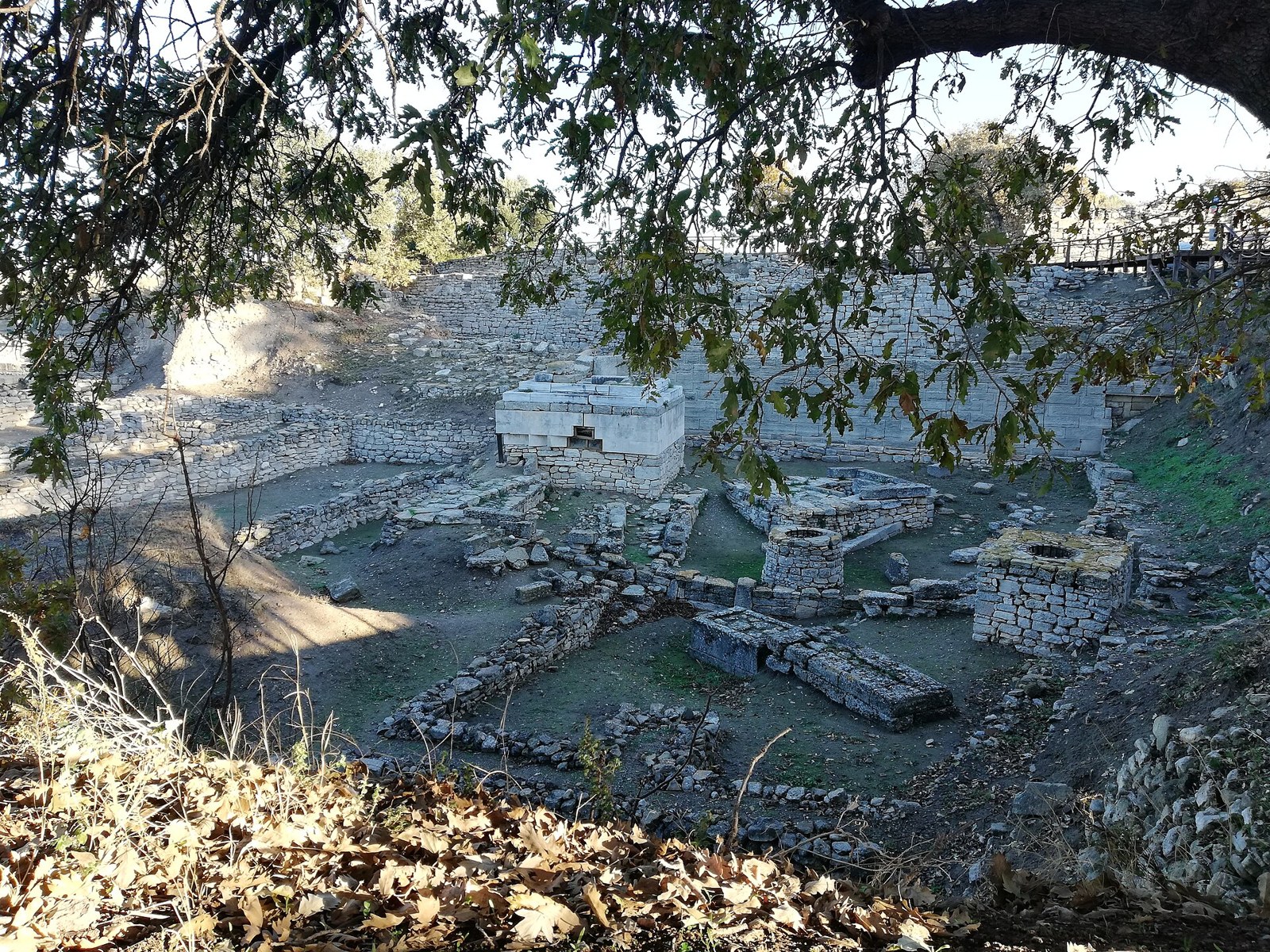
Archaeologists digging at Troy have found a bone flute about 2,800 years old. According to Turkish Culture and Tourism Minister Mehmet Nuri Ersoy, it is the first and only musical instrument found in more than 160 years of excavations at the site. The 2026 season also produced a 4,500-year-old human-shaped idol head.
Ersoy announced both finds on social media. The work is part of the ministry’s Legacy to the Future (Geleceğe Miras) project, which the ministry permits and supports.
What the Troy bone flute tells us
The flute dates to the Archaic Period, roughly 750 to 480 BC. Excavators found it in a layer of settlement fill from that era. According to the ministry, the head section that connects to the flute’s body has survived, which helps researchers judge how the instrument was built and used.
Survival is the main reason the find matters. Instruments made of organic materials rarely last for thousands of years. The ministry says the flute gives direct archaeological proof of music at Troy, where earlier evidence was indirect.
Music had a wide role in Archaic society. The ministry notes that it served religious rituals as well as social and public life. Wind instruments of the time included the syrinx, also called the panpipe, made from bone or reed tubes of different lengths. Some wind instruments were linked to the cult of Dionysos, the Greek god associated with wine and ritual celebration.
A 4,500-year-old idol head from Troy II
The second find is an idol head in human form, dated to about 2500 BC. Excavators found it near the Troy II city gate. It belongs to the Early Bronze Age.
Small human-shaped idols are typical finds in Western Anatolia in the third millennium BC. Similar pieces have already come from Troy and from other centres in the region. Comparing them helps researchers study how such objects were made and used, and how cultures influenced each other.
The ministry describes Troy II, dated to about 2500 to 2300 BC, as a developing centre. In that period, links between Anatolia and the Aegean world grew stronger. Officials say the idol head should help researchers understand the social and cultural structure of that time.
Why Troy still draws researchers
Settlement at Troy stretches from the early third millennium BC to the 13th century AD, with ten main layers identified. After destruction in the late 12th century BC, the ministry says, the area had no written sources for about four centuries. From the eighth century BC, Troy again became an important cultural and sacred centre, linked to the Homeric epics.
Many readers know Troy through the Trojan War legend. These finds point to something else: the beliefs, arts and daily life of the people who lived there. The ministry says it will keep studying and protecting the finds with scientific methods. Ersoy also thanked the excavation team and the General Directorate of Cultural Heritage and Museums.
Source: TRT Haber
Featured image: Hande111 / Wikimedia Commons, CC BY-SA 4.0