Sivas Great Mosque Restoration Keeps Its Leaning Minaret
Seljuk-era mosque in Sivas is being reinforced while its minaret keeps its lean.
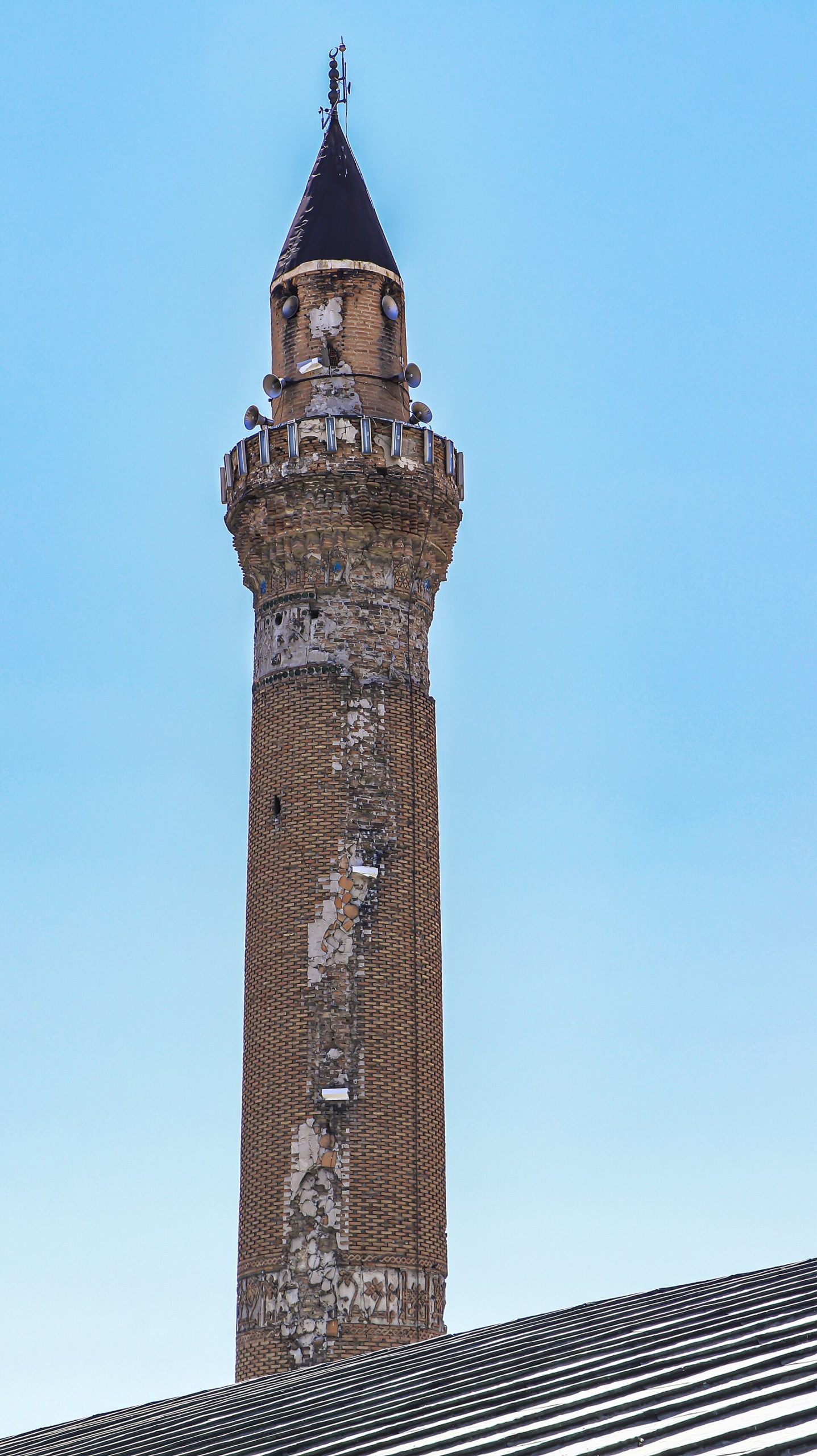
How do you repair an 800-year-old mosque without straightening the one thing everyone remembers? In Sivas, central Türkiye, the answer is a **reinforced structure and a minaret that keeps its lean**.
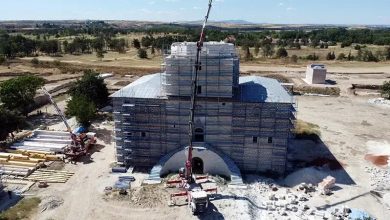
The Sivas Great Mosque (Sivas Ulu Cami) has been closed to worshippers for about 16 months. Its **restoration began in 2025**, and officials now aim to finish by the **end of 2027**.
Regional Foundations Director Mehmet Ali Çalışkan described the progress this week. His account shows where the work stands and what is still open.
Who built the Sivas Great Mosque, and when?
The mosque dates to the Anatolian Seljuk era, the 1196-1197 period. According to the construction inscription Çalışkan cited, Kızılarslan bin İbrahim had it built during the rule of Kutbeddin Melikşah, the ruler of Sivas. The inscription also names Kul Ahi.
The brick minaret came later. It was added around 1212-1213, and the source gives both years. Çalışkan called the mosque one of the oldest and most important Anatolian Seljuk places of worship still standing. He also named it a key example of early multi-column mosque architecture in Anatolia, in which many supports carry the roof.
What did the 1955 repairs change?
This is the question that explains the current project. Waqf (pious endowment) records show major repairs between 1525 and 1597. In 1955, a repair led by İsmail Hakkı Toprak removed the original earth roof and wooden ceiling cover. A reinforced concrete slab replaced them.
The present work reverses that choice. Crews lifted the concrete slab in a controlled way and installed a laminated timber cover, which the director described as restoring the original form. The roof insulation is finished. Titanium-zinc roofing is in its final stage.
Other work covers more ground:
- Strengthening of the load-bearing system, the first phase
- Floor-level adjustments and reinforcement of the edge piers inside
- Strengthening of walls and arches, with stone completion and surface cleaning
- Archaeological excavations in the mosque garden, supervised by the museum directorate and still under way
Why the leaning minaret is the hardest part
The minaret is the **most delicate stage**, Çalışkan said. Engineers are strengthening it under an **approved project** instead of correcting the tilt. Crews are also completing the brickwork, cleaning the surface and applying conservation treatments.
The source offers a striking detail. It says the minaret was built with a lean of 1.10 meters because of northerly winds. Over the years, the lean grew to 117 centimeters. We could not confirm the wind explanation in the primary material, so treat it as the directorate’s account. Other reports give slightly different figures, roughly 116 to 117 cm.
The final step is the completion of the minaret’s tilework. Çalışkan said the aim is to finish the whole restoration by the end of 2027. He used cautious wording, saying completion “is being considered,” so the date is a target, not a guarantee.
The project is funded through the Sivas Ulu Cami Foundation, set up by a benefactor, in cooperation with the Foundations directorate. One question remains unanswered: what will the garden excavations find?
Source: SonDakika
Featured image: Engin Mutlu 58 / Wikimedia Commons, CC BY-SA 4.0