Boubon Sculptures Reunited at Istanbul Archaeology Museums
The "No Escape: Boubon" exhibition opened on 2 November alongside 100 artifacts returned from the US.
The Boubon sculptures, bronze statues looted from an ancient city in southwestern Türkiye, have been brought together again in Istanbul. Culture and Tourism Minister Mehmet Nuri Ersoy opened the exhibition “No Escape: Boubon” at the Istanbul Archaeology Museums on 2 November 2026. He also presented 100 cultural artifacts that returned to Türkiye from the United States.
The show tells the story of a decades-long fight against the illicit trade in antiquities. Its centrepiece is a group of Roman-era bronzes whose heads, bodies and limbs had been scattered across different countries and collections.
What the Boubon sculptures are
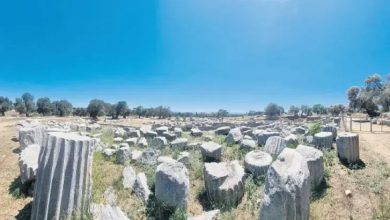
Boubon was an ancient city near İbecik village in the Gölhisar district of Burdur province. According to Ersoy, the statues once stood in the city’s Sebasteion, a monument dedicated to Roman emperors and members of the imperial family.
Illegal excavations broke the statues apart in the 1960s, and the pieces were smuggled out of Türkiye. The minister said the returned Boubon works include sculptures of the emperors Lucius Verus, Septimius Severus, Caracalla and Marcus Aurelius.
How researchers proved the origin
Ersoy described a mix of archive work, science and eyewitness memory. Professor Jale Inan began the effort by linking inscriptions, statue bases and sculptures held abroad. Journalist Özgen Acar kept the case alive, and New York Times reporters Graham Bowley and Tom Mashberg later added investigations.
Researchers also questioned İbecik villagers who saw the statues found and removed. They compared those accounts with old photographs and museum records.
The sculptures themselves gave further proof. Marks on the statues’ feet matched the fittings on their pedestals, and on the Marcus Aurelius statue the foot mold matched the recesses in its base. Soil and lead isotope analyses added more evidence, with help from Professor Ernst Pernicka of the Curt Engelhorn Center for Archaeometry in Germany.
The wider group of 100 returned artifacts
Ersoy said the ministry acted in May 2026, after a U.S.-based auction house offered Anatolian artifacts for sale. It shared its documentation with the Manhattan District Attorney’s Office and the U.S. Department of Homeland Security Investigations. The sale was halted and the objects came home.
Two groups stand out. Forty objects from Horoztepe in Tokat’s Erbaa district date from 2300 to 2000 B.C. and include ceremonial instruments, weapons and metal vessels. Another 44 terracotta roof plaques from Düver village in Burdur date to the sixth century B.C. The set also includes an Aphrodisias portrait, theater masks and goddess figurines.
Matthew Bogdanos, an assistant district attorney for Manhattan, attended the event. Ersoy thanked him and his team, as well as Turkish Airlines, which flew the artifacts home free of charge. Culture and Tourism Specialist Egemen Batu Varol curated the exhibition.
Excavations at Boubon continue
Ersoy said the repatriations have also renewed fieldwork at the site. Excavations resumed in 2023 under Dr. Düzgün Tarkan, coordinated by the Burdur Archaeology Museum. The returned Düver plaques will join others in the Istanbul collection as part of a forthcoming project.
The minister said Türkiye will keep tracing artifacts taken illegally from Anatolia through scientific, legal and diplomatic work.
Source: Daily Sabah
Featured image: Satdeep Gill / Wikimedia Commons, CC BY-SA 4.0