Nuruosmaniye Cistern in Istanbul Emerges After Restoration
Ottoman cistern under the Nuruosmaniye Complex is restored and hosts cultural events.
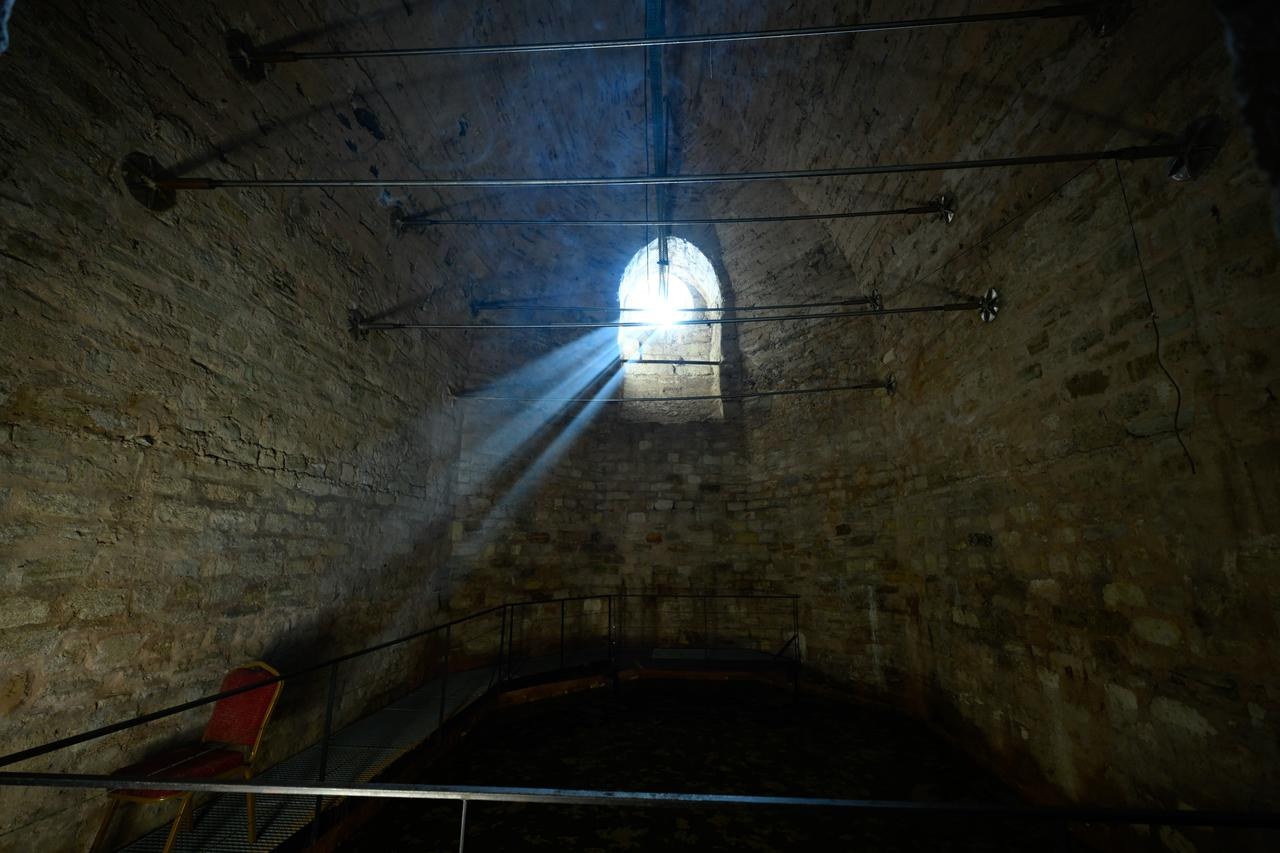
Beneath one of Istanbul’s grandest Baroque mosques, 420 truckloads of mud once hid a vaulted Ottoman water structure. Now the Nuruosmaniye Cistern is back in the light, and it hosts cultural events.
The cistern lies under the Nuruosmaniye Complex near Çemberlitaş Hill, in the Historical Peninsula. A metal walkway now leads visitors through its vaulted stone chambers, according to photographs published on 22 November 2026.
What the Nuruosmaniye Cistern was built to do
Sultan Mahmud I started the complex in 1748. His brother, Sultan Osman III, finished it in 1755, after Mahmud’s death. The mosque carries Osman’s name, and it is described as Istanbul’s first mosque in the Baroque style.
The cistern served two purposes. It reinforced the sloping ground under the mosque, and it drained collected water towards the Golden Horn, the inlet that divides European Istanbul. The source calls it an Ottoman engineering solution.
That detail matters. Visitors tend to think of cisterns as simple storage tanks. This one was also part of the foundation and drainage system of a major imperial building.
From rubble to restored vaults
Before comprehensive restoration began in the early 2010s, mud and rubble largely filled the space. Crews eventually removed 420 truckloads of sludge. The brick-and-stone arches and interconnected vaults are visible again.
The source does not say which institution carried out the work. It also gives no date for the public opening. We therefore cannot say when visitors first entered, only that the space now hosts cultural events.
Why Istanbul’s underground water heritage matters
Arzu Ulas, a researcher at Fatih Sultan Mehmet Vakıf University, puts the cistern in a wider picture. Istanbul’s old core is surrounded by sea on three sides, she says, so storing water was a vital need. Her team, working from Ottoman archives and fieldwork, identified 118 cisterns in the city. Of these, 33 are now lost.
Some of the 118 date from the Byzantine period. Ottoman builders added new ones and repaired older ones. Ulas also notes that mosque complexes, called külliye in Turkish, included facilities for the public. Water storage was a natural part of them.
Documenting these spaces was hard. Her team photographed dark chambers and reached flooded ones by boat or with scuba gear. She says they recorded both the underwater archaeological layers and the architectural elements.
A link between water and palace life
Ulas describes underground architecture as a mirror of the city above. She mentions tracing water that entered at Edirnekapı and fed a cistern before flowing out through the kitchens of Topkapı Palace. Some sections of that waterway are lost today.
For readers who know Ottoman history mainly through television, this is a useful reminder. Palaces, mosques and kitchens depended on hidden infrastructure. Series may show the grand halls, but archives and excavations show how the city actually worked.
The restored cistern gives visitors a rare chance to see that infrastructure up close. Its life as a cultural venue is now the next chapter.
Source: Türkiye Today
Featured image: Türkiye Today