Skopje’s Ottoman Stone Bridge Still Links Two Worlds
The Ottoman Stone Bridge has joined Skopje's modern centre and Turkish Bazaar for centuries.
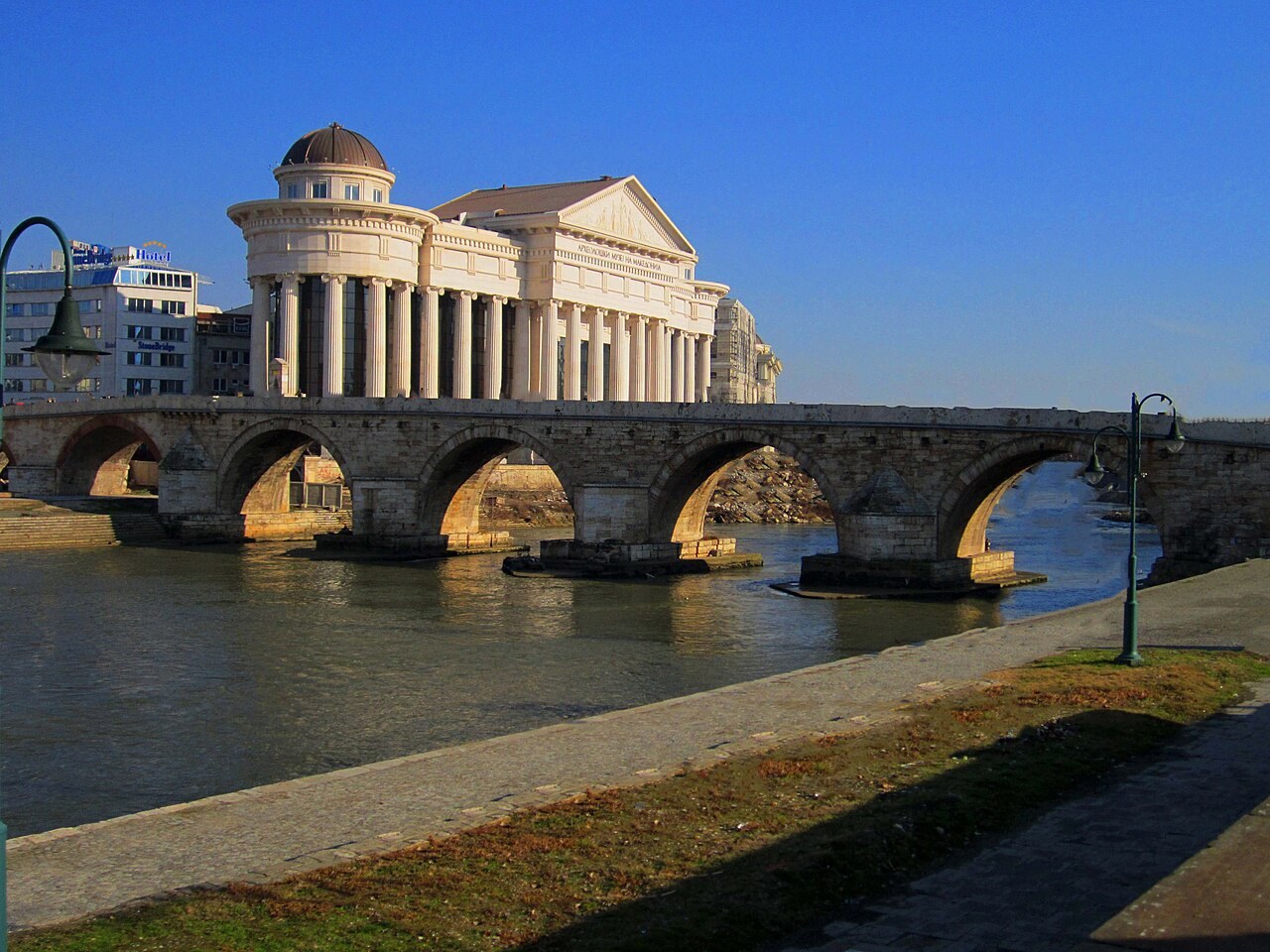
The Stone Bridge over the Vardar River in Skopje is an Ottoman-era landmark linked to Sultan Mehmed II. It still joins the modern centre of North Macedonia’s capital with the historic Turkish Bazaar. Türkiye Today highlighted the structure on 14 November 2026 as a place where cultures meet.
Locals simply call it the Stone Bridge. It is also known as the Sultan Mehmed II Bridge, and it remains one of the city’s best-known historical sites.
What the Ottoman Stone Bridge looks like today
Türkiye Today gives the construction period as 1451 to 1469. It says the bridge is about 220 metres (722 feet) long and 6 metres wide. The report also notes a mihrab on the structure, a prayer niche that marks the direction of Mecca in Islamic architecture.
The report counts 13 arches. Other references describe the bridge as having 12 arches, so the exact figure is worth checking before you quote it.
On one bank is the modern urban centre. On the other is the Turkish Bazaar, the old market quarter tied to Skopje’s Ottoman past. Pedestrians cross between the two throughout the day.
Restoration, lighting and everyday use
According to the report, the bridge has survived earthquakes, wars and other damaging events. It has needed repairs and restoration at different times, yet it never stopped being part of daily life in Skopje.
Recent lighting work now highlights its stone arches at night. Türkiye Today says the project was carried out through cooperation between Istanbul’s Esenler Municipality, Halkbank and the City of Skopje.
Mehmed II, the bridge and the debate over its origins
The link to Mehmed II (reigned 1444-1446 and 1451-1481), known as Mehmed the Conqueror, is the standard account. Popular references widely repeat the 1451-1469 dating.
Scholarship is less settled. Some sources say the Ottoman bridge stands on older foundations. One view points to a 6th-century bridge from the reign of Emperor Justinian I. Another cites the travel writer Evliya Çelebi for a 15th-century date but suggests the bridge may be earlier, possibly under Murad II (1421-1451). Readers should treat the exact builder and date as a topic historians still discuss.
For viewers of Ottoman dramas, the bridge is a reminder that Mehmed II’s era left a physical mark far beyond Istanbul. Series such as Mehmed: Sultan of Conquests dramatise his life, but buildings like this one are the lasting evidence of the period.
The bridge’s story also connects to a wider conversation about the Turkish Bazaar area, where Ottoman heritage remains a visible part of Skopje’s identity.
Source: Türkiye Today, Wikipedia, Stone Bridge (Skopje)
Featured image: Wikipedia