Gesi Dovecotes in Kayseri and Ottoman Gunpowder: The Link
A Kayseri expert says pigeon droppings from Gesi dovecotes supplied Ottoman saltpeter.
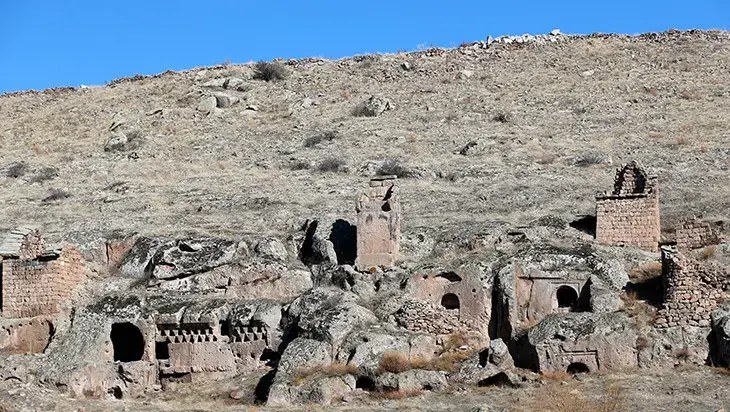
The stone dovecotes of Gesi in Kayseri may have played a part in Ottoman gunpowder production, according to a heritage expert. Prof. Dr. Osman Özsoy, Kayseri representative of the ÇEKÜL Foundation, says pigeon droppings from these buildings supplied the raw material for saltpeter (güherçile). The structures are estimated to be 200 to 250 years old.
Gesi is a neighbourhood in the Melikgazi district of Kayseri. Özsoy says dovecotes are found across the Gesi, Yeşilyurt and Koramaz Valley area, but are densest in Gesi itself.
How Gesi dovecotes may have fed gunpowder production
Özsoy describes a simple chain of steps. Pigeon droppings were mixed with straw and soil and left to stand, and the high nitrogen content turned into nitrate. Water was then added, and as it evaporated, crystals formed.
Those crystals were mixed with charcoal and pounded in mortars to make black powder, he explained. Saltpeter is a key ingredient of this powder, and he summed up the system by saying that owning a dovecote also meant holding a measure of power.
According to Özsoy, the state guaranteed to buy the droppings from farmers and villagers across Anatolia. He says this gave many families a reason to build dovecotes and join the supply chain. These are his statements. The report does not cite archival documents for Gesi itself, and he gives the age of the buildings only as an estimate.
What the historical record says about saltpeter
Academic studies do document state saltpeter works in central Anatolia. Konya had an imperial saltpeter factory that ran from 1842, and Kayseri also had one. Both supplied the imperial gunpowder works, and the Ottoman state tightly controlled this strategic mineral.
Özsoy says only these two cities had such factories, which fits the sources I found. Still, the specific role of Gesi’s dovecotes in feeding them is not something I could confirm independently. Readers should treat it as an expert’s account, not a settled finding.
More than a gunpowder story
Özsoy stresses that the dovecotes served many purposes. Pigeons provided meat in the days before refrigeration, feathers for pillows and quilts, and a way to send messages. Their droppings were a costly, valued fertiliser, used on vineyards in Cappadocia and on watermelons in Diyarbakır.
The buildings also have a distinctive form. They usually rise as a high wall of cut stone facing south, with ledges where birds can rest. Inside, nesting niches line the walls, while droppings collect in the central space and were cleared out at suitable times.
Similar structures exist elsewhere. Özsoy notes that they are called boranhane in Diyarbakır and kebuterhane in Iran, where he says they are the most elaborate. In Cappadocia, many are carved into rock formations.
He adds that the area’s dovecotes have been mapped since 2014 and have been registered as protected heritage. He also mentions that some buildings may once have served as columbaria, and that a rock-cut religious structure of roughly 1,000 years old stands in the same area.
Source: SonDakika
Featured image: Milliyet