Aksaray’s 725-Year-Old Church Shows Anatolia’s Layered Past
A ruined church in Aksaray reportedly became a mosque, then a village gathering place.
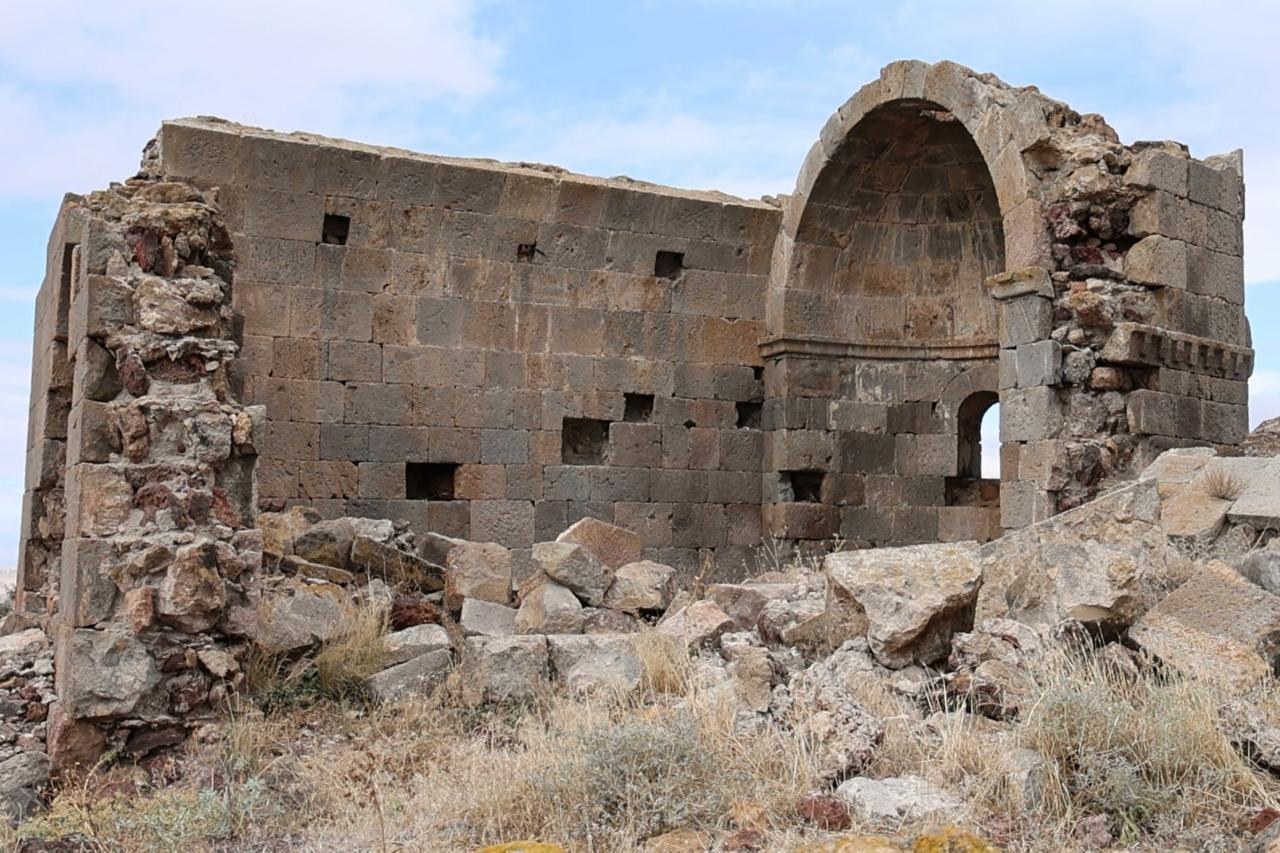
A 725-year-old church on Ana Sultan Hill in Türkiye’s central province of Aksaray is drawing attention for its changing uses. According to local accounts, it later served as a mosque, and villagers then used the hill as a community gathering place. The ruin offers a small but telling example of how sacred spaces in Anatolia changed hands and purposes over the centuries.
The structure stands between the villages of Gozlukuyu and Karkin. Photos from the IHA agency show partly collapsed walls, a surviving vaulted section and a semicircular apse (the rounded recess at the end of a church), all in open, rocky terrain.
What historian Mustafa Firat Gul says about the church
Historian and author Mustafa Firat Gul says records from the 14th century call the area Ana Sultan Hill, Ana Sultan Zawiya or Obruk Zawiya. A zawiya is a religious lodge linked to Muslim spiritual and communal life.
Gul notes that the church’s architecture resembles other Christian buildings in the region, including a monastery on the summit of Mount Hasan. He adds that Christian communities often built places of worship on high, defensible sites before the Turkish conquest of Aksaray in the 11th century.
From church to mosque: what is documented and what is not
The reported age of about 725 years is the figure given in the coverage. The later use of the building as a mosque or mescit, a small Muslim prayer hall, is less firmly documented. Gul says this information comes mainly from local villagers, not from surviving architectural records.
That distinction matters. Oral memory is valuable evidence of how a community understands its landscape. Even so, it is not the same as a dated building inscription or an archive document. The mosque phase should therefore be read as local testimony until further research confirms it.
Hıdırellez and a hill shared by villages
The hill also had a social life. Hıdırellez is a traditional spring festival that marks the arrival of warmer weather, and villagers celebrated it here. Gul says accounts indicate people used the area for celebrations, recreation and gatherings until fairly recently.
Local traveler Omer Yigit, 65, says the hill lies between the villages of Karaoren, Karkin and Yukari Gozlukuyu. Their residents traditionally shared the surrounding gardens and farmland. He also recalls that agricultural workers once gathered at the site for Friday prayers.
Why such sites matter for Turkish history
Many viewers of Turkish historical dramas know the Anatolia of the Seljuk and early Ottoman eras mainly through television. Places like Ana Sultan Hill show a quieter side of that world, where Christian and Muslim communities left layered marks on the same land. Series dramatize such periods, but sites like this one belong to the historical record and need careful study.
For now, the church survives as a partly ruined structure, and its story rests on a mix of historical references and local memory. Further study of the building and the Ana Sultan Zawiya records would help clarify the timeline.
Source: Türkiye Today
Featured image: Türkiye Today