Ottoman & Turkish Terms in Turkish Historical Series: A Glossary
Turkish historical series are full of words that English has no exact match for: Bey, Hatun, Hünkâr, Eyvallah, Inshallah. This Ottoman terms glossary explains 93 titles, tribal and political words, military ranks, Islamic expressions and everyday phrases you hear in series such as Kuruluş Osman, Kuruluş Orhan, Mehmed: Fetihler Sultanı, Vefa Sultan and Diriliş Ertuğrul. For each term you will find the spelling with and without Turkish letters, a simple pronunciation, the meaning, a short historical note and a real line from the English subtitles of the series.
The examples and the counts come from our own English subtitles of 85 recent episodes on OsmanOnline.live. Our subtitles keep many of these words untranslated on purpose, because they carry rank, faith and history that a plain English word would lose.
How to read Turkish letters
- c = j as in jam (Hoca = HO-jah)
- ç = ch as in chair (Çelebi)
- ş = sh as in ship (Paşa = pasha)
- ğ is silent and lengthens the vowel before it (Ağa = AH-ah)
- ı (dotless i) = the vowel in the or the second syllable of lemon (Kayı = kah-YUH)
- ö and ü = as in German (Töre, Hünkâr)
- â = a long a, sometimes softening the consonant before it (Hünkâr = hoon-KYAHR)
Contents
Titles and forms of address: Bey, Hatun, Hanım, Alp, Ağa, Paşa, Sultan, Hünkâr, Padişah, Şehzade, Valide Sultan, Vezir / Sadrazam, Efendi, Hoca, Kadı, Subaşı, Uç Beyi, Tekfur, Han / Kağan, Emir, Gazi, Şeyh, Derviş, Lala, Çelebi, Beylerbeyi, Molla, Hazret / Hz., Ahi
Tribes, dynasties and political terms: Kayı, Oğuz, Oba, Beylik, Selçuklu, Osmanlı, Divan, Ferman, Tuğra, Sancak, Payitaht, Devlet, Töre, Kurultay, Akçe, Ahidname, Harem, Kızıl Elma
Military terms: Akıncı, Sipahi, Tımar, Yeniçeri, Devşirme, Serdar, Mehter, Otağ, Gaza, Hisar, Hücum
Islamic expressions and religious terms: Allah, Bismillah, İnşallah, Maşallah, Elhamdülillah, Sübhanallah, Allahu Ekber, Estağfirullah, Eyvallah, Selamün Aleyküm, Amin, Sallallahu aleyhi ve sellem, İnna lillahi ve inna ileyhi raciun, Hasbunallahu ve ni'mel vekil, Lâ gâlibe illallah, Şehadet / Şehit, Dua, Namaz / Ezan, Kader / Nasip, Helal / Haram, Ümmet, Ahiret, Medrese, Zaviye / Dergâh / Tekke, Kâfir
Oaths, exclamations and everyday phrases: Vallahi / Billahi, Allah şahidim olsun, Emriniz başım üstüne, Hayırdır, Haydi / Hadi, Aman, Hain
Other terms you will meet in the series: Bacıyan-ı Rum, Kut, Tuğ
Titles and forms of address
Bey
Also written: Beg, Beyim (my Bey) · Pronunciation: bay
Meaning: Lord, chieftain; head of a tribe or principality.
An old Turkic title (beg) for the head of a tribe, a clan or a principality. In 13th and 14th century Anatolia every small principality (beylik) was ruled by a bey, and Osman I was known as Osman Bey long before his descendants called themselves sultans. In modern Turkish, Bey after a first name is simply a polite "Mr."
In the series: “Are you alright, brothers? -We're good, my Bey. Thanks.” (Mehmed: Fetihler Sultanı, Episode 86)
Appears in: Mehmed: Fetihler Sultanı, Kuruluş Orhan, Vefa Sultan, Aşk ve Taht, Kudüs Fatihi Selahaddin Eyyubi, Kuruluş Osman (2,395 times in 60 of our subtitled episodes)
Hatun
Also written: Khatun, Hatunum (my lady) · Pronunciation: hah-TOON
Meaning: Lady; title of a noblewoman, wife or mother of a ruler.
A Turkic and Mongol title for queens and noblewomen (khatun). Women of the early Ottoman dynasty were styled Hatun, for example Nilüfer Hatun, wife of Orhan; the style "Sultan" for royal women became usual only in the 16th century.
In the series: “Did Orhan Bey get victorious on his own, Nilufer Hatun?” (Kuruluş Orhan, Episode 2)
Appears in: Mehmed: Fetihler Sultanı, Vefa Sultan, Kuruluş Orhan, Aşk ve Taht, Kuruluş Osman, Diriliş Ertuğrul (564 times in 53 of our subtitled episodes)
Hanım
Also written: Hanim, Khanum · Pronunciation: hah-NUM
Meaning: Lady, Mrs.; polite address for a woman.
Originally the feminine form of Han (khan). In Ottoman and modern Turkish it follows a woman's first name as a polite form of address, like "Ayşe Hanım".
In the series: “You'll tell me everything you know about Handan Hanim.” (Payitaht: Abdülhamid, Season 2 Episode 51)
Appears in: Payitaht: Abdülhamid, Diriliş Ertuğrul, Güneşin Doğduğu Yer, Mavera, Mehmed: Fetihler Sultanı, Kuruluş Orhan (75 times in 7 of our subtitled episodes)
Alp
Also written: Alps, Alpler · Pronunciation: ahlp
Meaning: Brave warrior, hero.
An old Turkic word for a valiant warrior or hero, also found in names such as Alp Arslan. In the series the sworn warriors of the tribe are called alps (alpler) and follow their bey into battle.
In the series: “The poison weakened the strength of the Alps, Koca Bey.” (Kuruluş Osman, Episode 194)
Appears in: Kuruluş Orhan, Mehmed: Fetihler Sultanı, Kuruluş Osman, Diriliş Ertuğrul (180 times in 11 of our subtitled episodes)
Ağa
Also written: Agha, Aga · Pronunciation: AH-ah (the ğ is silent)
Meaning: Chief, commander, elder; title of officers and officials.
An Ottoman title for military commanders and senior household officials: the commander of the Janissaries was the Yeniçeri Ağası (Agha of the Janissaries). In rural Anatolia an ağa was also a powerful landowner.
In the series: “Ayaz Agha, you will take a unit and walk to the palace.” (Mehmed: Fetihler Sultanı, Episode 49)
Appears in: Mehmed: Fetihler Sultanı, Aşk ve Taht, Kuruluş Osman, Güneşin Doğduğu Yer, Kuruluş Orhan, Vefa Sultan (987 times in 45 of our subtitled episodes)
Paşa
Also written: Pasha, Pasa · Pronunciation: pah-SHAH
Meaning: Highest title for viziers, governors and generals.
The title of the highest Ottoman officials: viziers, provincial governors and top commanders. It followed the name, as in Çandarlı Halil Pasha or Zağanos Pasha. Titles such as paşa, bey and efendi were officially abolished in the Republic of Turkey in 1934.
In the series: “Dogan Pasha will take over those duties from now on.” (Mehmed: Fetihler Sultanı, Episode 64)
Appears in: Mehmed: Fetihler Sultanı, Vefa Sultan, Payitaht: Abdülhamid (2,619 times in 56 of our subtitled episodes)
Sultan
Also written: Sultanım (my Sultan) · Pronunciation: sool-TAHN
Meaning: Sovereign ruler; later also royal women.
From an Arabic word for power or authority. The Seljuks of Anatolia were ruled by sultans; the first Ottoman rulers were beys, and Orhan already appears as "sultan" in a Bursa inscription of 1337. From the 16th century the title was also placed after the names of princesses and royal mothers.
In the series: “All the levents in our shipyard are working, my Sultan.” (Mehmed: Fetihler Sultanı, Episode 48)
Appears in: Mehmed: Fetihler Sultanı, Vefa Sultan, Kuruluş Orhan, Aşk ve Taht, Payitaht: Abdülhamid, Kudüs Fatihi Selahaddin Eyyubi (2,894 times in 73 of our subtitled episodes)
Hünkâr
Also written: Hunkar, Hünkârım (my Sovereign) · Pronunciation: hoon-KYAHR
Meaning: The sovereign; respectful word for the Sultan.
A Persian-derived word for the ruler, used by courtiers when speaking to or about the Sultan. "Hünkârım" is usually rendered "My Sultan" or "Your Majesty". The related epithet Hüdavendigâr ("lord, sovereign") was attached to Sultan Murad I.
In the series: “Don't be so desperate, my Hunkar. Don't upset yourself.” (Mehmed: Fetihler Sultanı, Episode 71)
Appears in: Mehmed: Fetihler Sultanı, Payitaht: Abdülhamid, Vefa Sultan, Güneşin Doğduğu Yer (1,714 times in 45 of our subtitled episodes)
Padişah
Also written: Padishah, Padişahım · Pronunciation: pah-dee-SHAH
Meaning: Emperor, great king.
A Persian title meaning roughly "master king" or emperor. It was one of the standard titles of the Ottoman sultans; "Padişahım" is addressed to the ruler like "My Sultan".
In the series: “I did not use his name, my Padishah. I only did my duty.” (Mehmed: Fetihler Sultanı, Episode 85)
Appears in: Mehmed: Fetihler Sultanı, Payitaht: Abdülhamid (71 times in 21 of our subtitled episodes)
Şehzade
Also written: Shehzade, Shahzade, Sehzade · Pronunciation: sheh-zah-DEH
Meaning: Prince, son of the Sultan.
Persian for "born of the shah". Ottoman princes were sent as governors to provincial towns such as Manisa or Amasya to learn how to rule; the young Mehmed II governed Manisa before he took the throne.
In the series: “As you know, some Janissaries support Shahzade Bayezid.” (Mehmed: Fetihler Sultanı, Episode 51)
Appears in: Mehmed: Fetihler Sultanı, Kuruluş Orhan, Payitaht: Abdülhamid, Kuruluş Osman (929 times in 47 of our subtitled episodes)
Valide Sultan
Also written: Valide · Pronunciation: vah-lee-DEH sool-TAHN
Meaning: Mother of the reigning Sultan.
The title of the reigning sultan's mother, the most powerful woman of the palace. It became a formal title only in the 16th century (Hafsa Sultan, mother of Suleiman the Magnificent, is usually named as the first), so in stories set in the 14th and 15th centuries the sultan's mother is still called Hatun.
Typical use: "The Valide Sultan wishes to see you": the mother of the Sultan summons someone in the harem.
Vezir / Sadrazam
Also written: Vizier, Grand Vizier, Vezir-i Azam · Pronunciation: veh-ZEER / sah-drah-ZAHM
Meaning: Minister; the Grand Vizier was head of the government.
Viziers sat in the Imperial Council (Divan); the Grand Vizier (sadrazam) held the Sultan's seal and led the government and often the army. Çandarlı Halil Pasha, Grand Vizier under Murad II and Mehmed II, was executed soon after the conquest of Constantinople in 1453.
In the series: “The Grand Vizier made the plan, and you played it well.” (Mehmed: Fetihler Sultanı, Episode 49)
Appears in: Mehmed: Fetihler Sultanı, Aşk ve Taht, Imam Ghazali, Hay Sultan, Mavera (316 times in 43 of our subtitled episodes)
Efendi
Also written: Effendi, Efendim, Efendimiz · Pronunciation: eh-fen-DEE
Meaning: Sir, master; title for educated men and officials.
A title for learned men, clerics and officials, from a Greek word for master. "Efendim" means "sir" or "yes?", and "Peygamber Efendimiz" is a reverent way to say "our Prophet". The title was abolished as an official style in 1934.
In the series: “The intelligence you told us was right, Crowley Efendi.” (Payitaht: Abdülhamid, Season 2 Episode 51)
Appears in: Mehmed: Fetihler Sultanı, Vefa Sultan, Payitaht: Abdülhamid, Imam Ghazali, Güneşin Doğduğu Yer, Hay Sultan (303 times in 58 of our subtitled episodes)
Hoca
Also written: Hodja, Hace, Khwaja · Pronunciation: HO-jah
Meaning: Teacher, scholar, religious master.
From the Persian khwaja. A hoca is a teacher, a religious scholar or a respected master; the most famous is the folk humorist Nasreddin Hodja. Ottoman princes had their own hocas, as Mehmed II did.
In the series: “How are you feeling? Do you feel any better, Hace?” (Mehmed: Fetihler Sultanı, Episode 69)
Appears in: Mehmed: Fetihler Sultanı, Hay Sultan, Mavera (79 times in 8 of our subtitled episodes)
Kadı
Also written: Qadi, Kadi · Pronunciation: kah-DUH
Meaning: Judge.
A judge who applied Islamic and Ottoman law and also carried administrative duties in his district. According to Ottoman tradition, Dursun Fakih was the first kadı appointed by Osman Bey.
In the series: “Qadi, write this in your book. Call it the last plan.” (Kudüs Fatihi Selahaddin Eyyubi, Episode 58)
Appears in: Mehmed: Fetihler Sultanı, Kudüs Fatihi Selahaddin Eyyubi, Hay Sultan (66 times in 14 of our subtitled episodes)
Subaşı
Also written: Subashi, Subasi · Pronunciation: soo-bah-SHUH
Meaning: Commander of a town's troops; chief of security.
Literally "head of the troops". In Seljuk and early Ottoman times the subaşı was a military governor of a town or district; later the title was used for officers responsible for public order.
In the series: “We considered him oppressed, so we gave him coins, Subashi.” (Vefa Sultan, Episode 31)
Appears in: Vefa Sultan
Uç Beyi
Also written: Uc Beyi, Frontier Bey, Lord of the Marches · Pronunciation: OOCH bay-ee
Meaning: Frontier lord, warden of the borderlands.
Uç means frontier. The uç beyleri were Turkmen lords on the Seljuk border with Byzantium who raided and expanded on their own; the Ottoman state itself grew out of such a frontier principality around Söğüt.
Typical use: A frontier lord reports raids on the Byzantine border to the bey of the tribe.
Appears in: Diriliş Ertuğrul, Kuruluş Osman, Kuruluş Orhan
Tekfur
Also written: Tekvur · Pronunciation: tek-FOOR
Meaning: Byzantine lord or governor of a fortress town.
The word used in Turkish sources for local Byzantine lords and fortress commanders in Anatolia and Thrace; it is usually traced to the Armenian word for king. The tekfurs of Bilecik and İnegöl are among Osman Bey's rivals in the early Ottoman chronicles.
In the series: “What a pleasant coincidence, Tekfur Saroz!” (Kuruluş Orhan, Episode 2)
Appears in: Kuruluş Orhan, Diriliş Ertuğrul, Kuruluş Osman
Han / Kağan
Also written: Khan, Kagan, Khagan · Pronunciation: hahn / kah-AHN
Meaning: Ruler of Turkic or Mongol peoples; Khagan = khan of khans.
Khan was the title of Turkic and Mongol rulers; khagan, the "khan of khans", was the supreme ruler of an empire, as in the Göktürk Khaganate. In the age of Osman Bey much of Anatolia was under the Mongol Ilkhanate, whose rulers were called Ilkhan.
In the series: “Your brother in religion and blood, Sultan Mehmed Khan.” (Mehmed: Fetihler Sultanı, Episode 50)
Appears in: Mehmed: Fetihler Sultanı, Kuruluş Orhan (220 times in 42 of our subtitled episodes)
Emir
Also written: Amir · Pronunciation: eh-MEER
Meaning: Commander, prince, governor.
From the Arabic amir, "one who commands". The title was used for Seljuk commanders, provincial governors and the rulers of smaller states.
In the series: “Even if we are Emir or Bey, we are soldiers in the end.” (Kudüs Fatihi Selahaddin Eyyubi, Episode 57)
Appears in: Mehmed: Fetihler Sultanı, Kudüs Fatihi Selahaddin Eyyubi, Diriliş Ertuğrul, Güneşin Doğduğu Yer, Hay Sultan, Aşk ve Taht (61 times in 10 of our subtitled episodes)
Gazi
Also written: Ghazi · Pronunciation: gah-ZEE
Meaning: Warrior of the faith; honoured veteran.
An honorific for a warrior who fought for Islam, carried by early Ottoman rulers such as Osman Gazi and Orhan Gazi. The Turkish Grand National Assembly gave the title Gazi to Mustafa Kemal in 1921.
In the series: “Danisment Ghazi spent his life fighting the Crusaders.” (Mehmed: Fetihler Sultanı, Episode 56)
Appears in: Mehmed: Fetihler Sultanı, Kuruluş Orhan, Kuruluş Osman, Diriliş Ertuğrul (66 times in 12 of our subtitled episodes)
Şeyh
Also written: Sheikh, Sheik, Seyh · Pronunciation: shake
Meaning: Spiritual leader of a Sufi order; respected elder.
The head of a Sufi order or lodge, or a respected religious elder. Ottoman tradition holds that Osman Bey married the daughter of Sheikh Edebali, whose blessing is linked to Osman's famous dream.
In the series: “But the path to truth is through questioning, my Sheik.” (Vefa Sultan, Episode 15)
Appears in: Vefa Sultan, Mehmed: Fetihler Sultanı, Kuruluş Orhan, Imam Ghazali, Hay Sultan, Diriliş Ertuğrul (809 times in 46 of our subtitled episodes)
Derviş
Also written: Dervish · Pronunciation: der-VEESH
Meaning: Member of a Sufi order.
From a Persian word for a poor man. Dervishes belonged to Sufi orders such as the Mevlevis (the whirling dervishes) and the Bektashis, and wandering dervishes played a large part in spreading Islam in Anatolia and the Balkans.
In the series: “Do not be stingy with love if you want to be a dervish.” (Vefa Sultan, Episode 31)
Appears in: Vefa Sultan, Mehmed: Fetihler Sultanı, Mavera, Kuruluş Orhan (150 times in 27 of our subtitled episodes)
Lala
Also written: Lalam (my Lala) · Pronunciation: LAH-lah
Meaning: Tutor and guardian of a prince.
An experienced statesman or soldier appointed to raise and advise a prince. Lala Şahin Pasha, tutor of Murad I, became one of the first great Ottoman commanders in the Balkans.
In the series: “And we were discussing this with my Lala Molla Gurani.” (Mehmed: Fetihler Sultanı, Episode 45)
Appears in: Mehmed: Fetihler Sultanı, Vefa Sultan (208 times in 37 of our subtitled episodes)
Çelebi
Also written: Celebi, Chelebi · Pronunciation: cheh-leh-BEE
Meaning: Gentleman, cultivated man; title of princes.
A title for educated, refined men; in the 14th and 15th centuries also for Ottoman princes, such as Mehmed Çelebi (later Mehmed I) and his brothers in the Interregnum.
In the series: “If you knew Qadi Hizir Celebi, you'd know he is right.” (Mehmed: Fetihler Sultanı, Episode 45)
Appears in: Mehmed: Fetihler Sultanı (43 times in 15 of our subtitled episodes)
Beylerbeyi
Also written: Beylerbey · Pronunciation: bay-ler-BAY-ee
Meaning: "bey of beys", governor-general of a great province.
The governor-general of one of the large Ottoman provinces, at first Rumelia (the Balkans) and Anatolia, commanding the provincial cavalry of his region.
In the series: “You were Beylerbeyi of Anatolia just yesterday.” (Mehmed: Fetihler Sultanı, Episode 67)
Appears in: Mehmed: Fetihler Sultanı (12 times in 8 of our subtitled episodes)
Molla
Also written: Mullah, Mawla · Pronunciation: mol-LAH
Meaning: Islamic scholar; senior judge.
A title for learned religious scholars and senior judges. Molla Gürani was one of the teachers of the young Mehmed II.
In the series: “Maybe Molla Lutfi doesn't even know the road to Pontus?” (Mehmed: Fetihler Sultanı, Episode 51)
Appears in: Mehmed: Fetihler Sultanı, Vefa Sultan, Hay Sultan (133 times in 44 of our subtitled episodes)
Hazret / Hz.
Also written: Hazreti, Hadhrat · Pronunciation: haz-RET
Meaning: Honorific: "His Holiness", before holy names.
An Arabic-derived honorific placed before the names of prophets, the Companions of the Prophet and great saints, abbreviated Hz. in Turkish (for example Hz. Muhammed).
In the series: “Hadhrat Aksemseddin had departed and someone else came.” (Mehmed: Fetihler Sultanı, Episode 54)
Appears in: Mehmed: Fetihler Sultanı, Kudüs Fatihi Selahaddin Eyyubi, Kuruluş Orhan, Payitaht: Abdülhamid, Kuruluş Osman, Aşk ve Taht (159 times in 44 of our subtitled episodes)
Ahi
Also written: Akhi, Ahiler · Pronunciation: ah-HEE
Meaning: Member of a brotherhood of craftsmen and merchants.
The Ahi brotherhoods (Ahilik) were guild-like fraternities of craftsmen in 13th and 14th century Anatolia that combined trade ethics, Sufi ideals and hospitality; tradition names Ahi Evran as their founder. The traveller Ibn Battuta described being hosted by Ahi lodges in the 1330s.
In the series: “Come on then, companions. Let's help our Ahis who are in need.” (Mehmed: Fetihler Sultanı, Episode 67)
Appears in: Mehmed: Fetihler Sultanı (9 times in 3 of our subtitled episodes)
Tribes, dynasties and political terms
Kayı
Also written: Kayi, Kayı Boyu · Pronunciation: kah-YUH
Meaning: Oghuz Turkic tribe of the Ottoman dynasty's tradition.
One of the Oghuz Turkic tribes, listed by Mahmud al-Kashgari in the 11th century. Fifteenth century Ottoman chroniclers traced the dynasty to the Kayı, the tribe of Ertuğrul and Osman in the series.
In the series: “He is one of the greatest commanders Kayi has ever seen.” (Kuruluş Orhan, Episode 3)
Appears in: Kuruluş Orhan, Kuruluş Osman, Diriliş Ertuğrul, Mehmed: Fetihler Sultanı (102 times in 9 of our subtitled episodes)
Oğuz
Also written: Oghuz, Oguz · Pronunciation: oh-OOZ
Meaning: Turkic tribal confederation, ancestors of the Anatolian Turks.
A large confederation of Turkic tribes from Central Asia. The Seljuks, the Ottomans and the Turkmen of Anatolia, Azerbaijan and Turkmenistan all descend from Oghuz groups.
In the series: “It's an old tradition. It dates back to Oghuz ancestors.” (Mehmed: Fetihler Sultanı, Episode 66)
Appears in: Mehmed: Fetihler Sultanı, Aşk ve Taht, Kuruluş Osman, Diriliş Ertuğrul, Kuruluş Orhan (44 times in 20 of our subtitled episodes)
Oba
Also written: Obah · Pronunciation: oh-BAH
Meaning: Nomadic camp of a clan; the tribe's tents.
The tent camp of a nomadic family group. In the series the oba is the tribe's home: tents, herds, workshops and the bey's council tent.
In the series: “You put yourself and your oba in danger for me.” (Diriliş Ertuğrul, Episode 391)
Appears in: Diriliş Ertuğrul, Güneşin Doğduğu Yer, Kuruluş Osman, Kuruluş Orhan (8 times in 2 of our subtitled episodes)
Beylik
Also written: Beyliks, Principality · Pronunciation: bay-LEEK
Meaning: Principality ruled by a bey.
After the Seljuk Sultanate of Rum weakened in the late 13th century, Anatolia split into Turkmen beyliks such as Karaman, Germiyan, Karesi and the Ottoman beylik, which outgrew all the others.
In the series: “That happens in the Beylik of Karaman.” (Mehmed: Fetihler Sultanı, Episode 76)
Appears in: Mehmed: Fetihler Sultanı, Diriliş Ertuğrul, Kuruluş Orhan, Kuruluş Osman (6 times in 4 of our subtitled episodes)
Selçuklu
Also written: Seljuk, Seljuq, Selcuk · Pronunciation: sel-chook-LOO
Meaning: The Seljuks, Turkic dynasty that ruled Iran and Anatolia.
The Great Seljuks ruled Iran and Iraq from the 11th century; after Alp Arslan's victory at Manzikert (Malazgirt) in 1071 Turkic groups settled in Anatolia, where the Seljuk Sultanate of Rum ruled from Konya. The Mongol victory at Kösedağ in 1243 left the Anatolian Seljuks weak.
In the series: “It was Seljuks who made Anatolia a homeland for Turks.” (Aşk ve Taht, Episode 3)
Appears in: Mehmed: Fetihler Sultanı, Kuruluş Orhan, Aşk ve Taht, Diriliş Ertuğrul, Mavera (38 times in 11 of our subtitled episodes)
Osmanlı
Also written: Ottoman, Osmanli · Pronunciation: os-mahn-LUH
Meaning: Ottoman: "of Osman"
Means "belonging to Osman", after Osman I, founder of the dynasty. The English "Ottoman" comes from the Arabic form of the name, Uthman.
Typical use: "Osmanlı" in Turkish, "Ottoman" in our subtitles: the house and state of Osman.
Divan
Also written: Divan-ı Hümayun, Imperial Council · Pronunciation: dee-VAHN
Meaning: Council of state; the Imperial Council.
The council where the ruler or his grand vizier heard petitions and decided state affairs; in the classical period it met in the Topkapı Palace as the Divan-ı Hümayun. In the series a bey's council of elders is also called a divan.
In the series: “It is not, Divan-i Humayun for nothing.” (Mehmed: Fetihler Sultanı, Episode 69)
Appears in: Mehmed: Fetihler Sultanı, Payitaht: Abdülhamid
Ferman
Also written: Firman · Pronunciation: fer-MAHN
Meaning: Imperial decree.
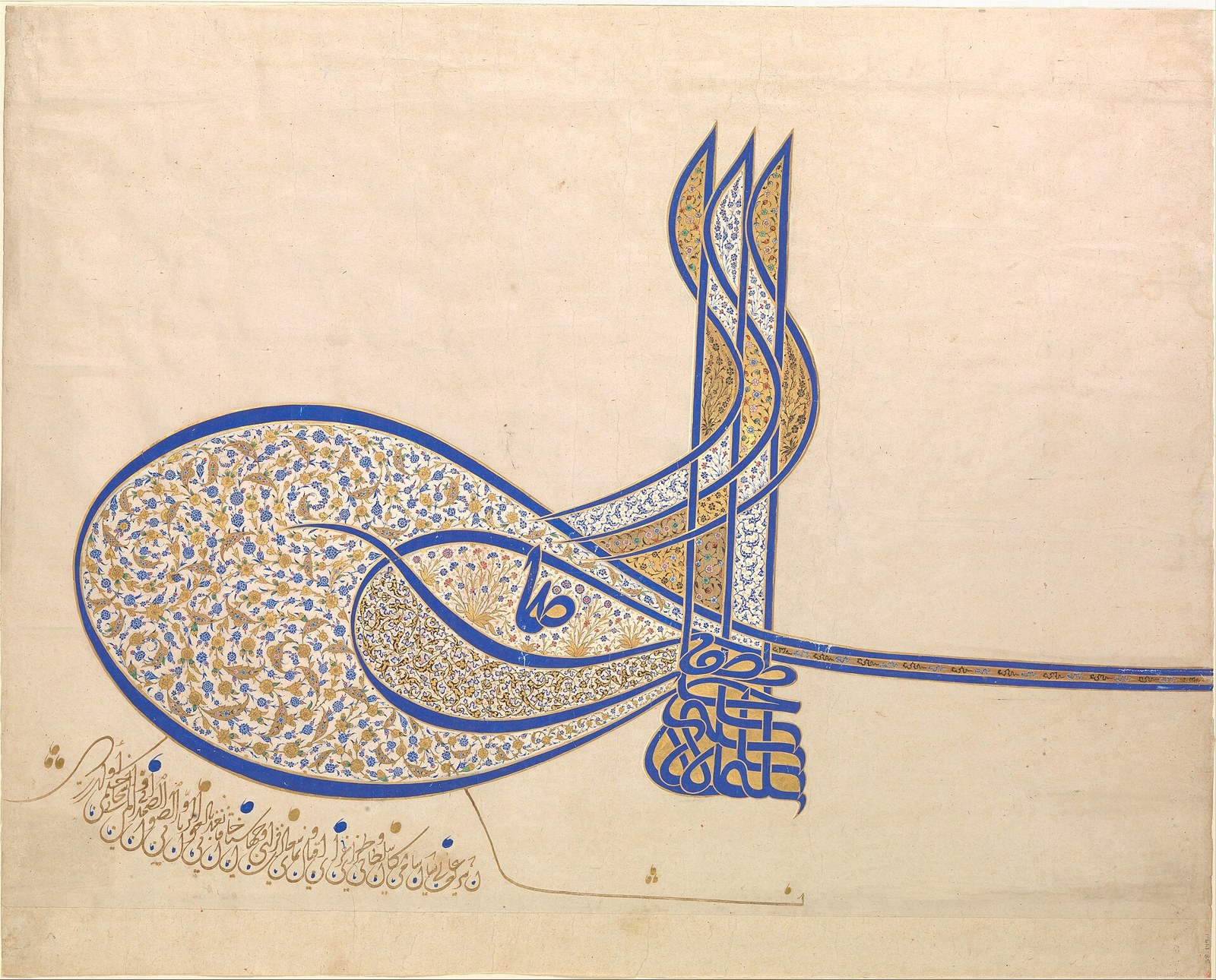
A written order of the Sultan, issued in his name and headed by his tughra (monogram). Fermans granted offices, lands and privileges and announced state decisions.
In the series: “Get this firman read all over the country, Reyhan Agha.” (Mehmed: Fetihler Sultanı, Episode 62)
Appears in: Mehmed: Fetihler Sultanı, Kuruluş Orhan (6 times in 6 of our subtitled episodes)
Tuğra
Also written: Tughra, Tugra · Pronunciation: too-RAH (the ğ is silent)
Meaning: The Sultan's calligraphic monogram.
An elaborate calligraphic signature containing the Sultan's name, placed at the head of his decrees and on coins. Every sultan had his own tughra.
In the series: “Prepare a Quran, a sable fur caftan, and a tughra-bearing decree.” (Mehmed: Fetihler Sultanı, Episode 66)
Appears in: Mehmed: Fetihler Sultanı
Sancak
Also written: Sanjak, Al Sancak · Pronunciation: sahn-JAHK
Meaning: Banner; also an administrative district.
Sancak means banner or flag. Because a governor received a banner from the Sultan, the word also came to mean a district governed by a sancakbeyi. Al Sancak, "the red banner", is the Ottoman flag.
In the series: “The sanjak that is planted once never comes down again.” (Mehmed: Fetihler Sultanı, Episode 61)
Appears in: Mehmed: Fetihler Sultanı, Kuruluş Orhan, Kudüs Fatihi Selahaddin Eyyubi, Kuruluş Osman (93 times in 35 of our subtitled episodes)
Payitaht
Also written: Payitaht-ı Saltanat · Pronunciation: pah-yee-TAHT
Meaning: The imperial capital.
A Persian word meaning "foot of the throne", used for the capital. The Ottoman capital moved from Bursa (taken in 1326) to Edirne and, after 1453, to Istanbul. The series Payitaht: Abdülhamid takes its name from it.
In the series: “Ishak Pasha will continue his duty in Payitaht now.” (Mehmed: Fetihler Sultanı, Episode 62)
Appears in: Mehmed: Fetihler Sultanı, Payitaht: Abdülhamid (53 times in 17 of our subtitled episodes)
Devlet
Also written: Devlet-i Aliyye · Pronunciation: dev-LET
Meaning: State, realm, dynasty.
The Ottoman Empire called itself Devlet-i Aliyye, "the Sublime State". In the series the founders often speak of "devlet" as the dream of a lasting state beyond the tribe.
Typical use: "We will build a devlet": the founders' dream of a state that outlives the tribe.
Töre
Also written: Tore, Törü · Pronunciation: tuh-REH
Meaning: Unwritten customary law of the Turkic tribes.
The body of customs and unwritten law that governed Turkic tribal life: justice, inheritance and the duties of a bey. Rulers were expected to uphold töre alongside Islamic law.
Typical use: "Töre is above us all": an elder reminds a bey that even he must obey custom.
Appears in: Diriliş Ertuğrul, Kuruluş Osman
Kurultay
Also written: Kurultai, Qurultai · Pronunciation: koo-rool-TIE
Meaning: Great assembly of tribal leaders.
An assembly of Turkic or Mongol chiefs that chose a ruler or decided on war. A kurultai proclaimed Temüjin as Genghis Khan in 1206.
Typical use: The beys of the tribes meet in a kurultay to choose a leader.
Appears in: Diriliş Ertuğrul
Akçe
Also written: Akche, Akce · Pronunciation: ahk-CHEH
Meaning: Ottoman silver coin.
The basic silver coin of the Ottoman state, literally "little white one". The first known Ottoman akçe was struck under Orhan Gazi, dated 1327.
Typical use: A merchant counts his akçes; a fine or a reward is paid in silver akçe.
Ahidname
Also written: Ahdname, Ahdnama · Pronunciation: ah-heed-nah-MEH
Meaning: Treaty or charter of rights granted by the Sultan.
A sworn charter or treaty. A well-known example is the ahidname that Mehmed II granted to the Franciscans of Bosnia in 1463, guaranteeing their freedom of worship.
Typical use: A defeated lord or a foreign community receives an ahidname guaranteeing its rights.
Harem
Also written: Harem-i Hümayun · Pronunciation: hah-REM
Meaning: The private family quarters of the palace.
From an Arabic word for something protected or sacred. The imperial harem was the household of the Sultan's family, with its own hierarchy and education, headed in the classical period by the Valide Sultan.
In the series: “I see that you understand how Harem works.” (Mehmed: Fetihler Sultanı, Episode 86)
Appears in: Mehmed: Fetihler Sultanı, Aşk ve Taht, Payitaht: Abdülhamid, Hay Sultan (71 times in 22 of our subtitled episodes)
Kızıl Elma
Also written: Kizil Elma, Red Apple · Pronunciation: kuh-ZUHL el-MAH
Meaning: "the Red Apple": the far goal of conquest.
A legendary symbol of the ultimate goal of Turkish conquest. It was associated in turn with Constantinople, then Rome and Vienna, and survives as a metaphor for a great ideal.
In the series: “To the red apple, one step at a time. -InshaAllah.” (Mehmed: Fetihler Sultanı, Episode 62)
Appears in: Mehmed: Fetihler Sultanı, Kuruluş Orhan, Kudüs Fatihi Selahaddin Eyyubi (32 times in 18 of our subtitled episodes)
Military terms
Akıncı
Also written: Akinci, Akindji, Raider · Pronunciation: ah-kuhn-JUH
Meaning: Light cavalry raider of the frontier.
Light cavalry who raided ahead of the Ottoman armies on the frontiers. They were led by hereditary families such as the Mihaloğulları, Malkoçoğulları and Turahanoğulları.
Typical use: The akıncıs ride ahead of the army to scout and raid the enemy's lands.
Sipahi
Also written: Spahi · Pronunciation: see-pah-HEE
Meaning: Cavalryman holding a land grant (timar).
The provincial cavalry of the classical Ottoman army. A sipahi held a timar, the right to collect certain taxes from a piece of land, and in return came to war with his horse and armour.
In the series: “Sipahi issues are solved now. What about Janissaries?” (Mehmed: Fetihler Sultanı, Episode 67)
Appears in: Mehmed: Fetihler Sultanı (31 times in 17 of our subtitled episodes)
Tımar
Also written: Timar · Pronunciation: tuh-MAHR
Meaning: Land revenue grant in exchange for military service.
A grant of tax revenue from a village or land, given to a sipahi in return for military service. The system tied the army to the land and spread across the conquered provinces.
In the series: “Have the timar lands in Isfendiyaroglu been distributed?” (Mehmed: Fetihler Sultanı, Episode 58)
Appears in: Mehmed: Fetihler Sultanı (22 times in 6 of our subtitled episodes)
Yeniçeri
Also written: Janissary, Janissaries · Pronunciation: yeh-nee-cheh-REE
Meaning: Janissary: elite standing infantry of the Sultan.
"New soldier": the Sultan's standing infantry, formed in the 14th century and recruited largely through the devşirme. The corps was abolished by Mahmud II in 1826.
In the series: “I know the state of the Janissaries better than anyone.” (Mehmed: Fetihler Sultanı, Episode 65)
Appears in: Mehmed: Fetihler Sultanı, Vefa Sultan (371 times in 40 of our subtitled episodes)
Devşirme
Also written: Devshirme, Devsirme · Pronunciation: dev-sheer-MEH
Meaning: Levy of Christian boys for the Janissaries and palace.
The periodic collection of boys from Christian families in the Balkans and Anatolia, who were converted and trained for the Janissary corps or palace service; some rose to become grand viziers.
In the series: “He is a devshirme from Wallachia, just like you.” (Mehmed: Fetihler Sultanı, Episode 71)
Appears in: Mehmed: Fetihler Sultanı
Serdar
Also written: Serdar-ı Ekrem · Pronunciation: ser-DAHR
Meaning: Commander-in-chief of a campaign.
A Persian-derived word for the commander of an army or campaign; Serdar-ı Ekrem was the supreme commander, usually the grand vizier.
Typical use: The Sultan names a serdar to lead the campaign in his place.
Mehter
Also written: Mehterhane, Ottoman military band · Pronunciation: meh-TER
Meaning: Ottoman military band.
The military band of the Ottoman army, with kettle drums, the shrill zurna and cymbals, playing in camp and in battle. It is considered one of the oldest military band traditions in the world.
In the series: “Mehter band, stand upright!” (Mehmed: Fetihler Sultanı, Episode 60)
Appears in: Mehmed: Fetihler Sultanı
Otağ
Also written: Otag, Otağ-ı Hümayun · Pronunciation: oh-TAH (the ğ is silent)
Meaning: The ruler's grand tent on campaign.
The large ceremonial tent of the Sultan or a bey, pitched at the centre of the army camp; councils of war were held inside.
Typical use: The pashas are summoned to the Sultan's otağ on the eve of battle.
Gaza
Also written: Ghaza, Gaza and cihad · Pronunciation: gah-ZAH
Meaning: Holy campaign; raid on the frontier.
A campaign fought for the faith; the warrior is a gazi. How central gaza was to the rise of the Ottomans is debated by historians since Paul Wittek's "ghaza thesis" of the 1930s.
In the series: “May our gaza be mubarak. -Aameen. -Bismillah.” (Mehmed: Fetihler Sultanı, Episode 86)
Appears in: Mehmed: Fetihler Sultanı, Kuruluş Orhan, Kuruluş Osman, Kudüs Fatihi Selahaddin Eyyubi (14 times in 11 of our subtitled episodes)
Hisar
Also written: Hisari, Fortress · Pronunciation: hee-SAHR
Meaning: Fortress, castle.
A fortress or fortified town. Mehmed II built Rumeli Hisarı on the Bosphorus in 1452, a year before the conquest of Constantinople, facing the older Anadolu Hisarı built under Bayezid I.
In the series: “You've heard him, valiants! To Orta Hisar!” (Mehmed: Fetihler Sultanı, Episode 62)
Appears in: Mehmed: Fetihler Sultanı
Hücum
Also written: Hucum, Charge! · Pronunciation: hoo-JOOM
Meaning: "Charge!"; attack.
The battle cry that sends the warriors forward. Subtitles usually render it simply as "Charge!".
Typical use: The commander raises his sword and shouts "Hücum!" ("Charge!").
Islamic expressions and religious terms
Allah
Also written: God · Pronunciation: ahl-LAH
Meaning: God (the Arabic name used by Muslims).
The Arabic word for God, used by Muslims in every language and also by Arabic-speaking Christians. Our subtitles keep "Allah" wherever the characters say it.
In the series: “With Allah's permission, you will get over this too.” (Mehmed: Fetihler Sultanı, Episode 83)
Appears in: Mehmed: Fetihler Sultanı, Vefa Sultan, Kuruluş Orhan, Imam Ghazali, Payitaht: Abdülhamid, Kudüs Fatihi Selahaddin Eyyubi (2,890 times in 84 of our subtitled episodes)
Bismillah
Also written: Bismillahirrahmanirrahim · Pronunciation: bis-mil-LAH
Meaning: "In the name of Allah"
Said before beginning any action, from eating to riding into battle. The full form, "In the name of Allah, the Most Compassionate, the Most Merciful", opens every chapter of the Qur'an except the ninth.
In the series: “Come on, companions! Bismillah! -Come on my lions!” (Mehmed: Fetihler Sultanı, Episode 73)
Appears in: Mehmed: Fetihler Sultanı, Kuruluş Orhan, Diriliş Ertuğrul, Imam Ghazali, Güneşin Doğduğu Yer, Hay Sultan (126 times in 41 of our subtitled episodes)
İnşallah
Also written: Inshallah, InshaAllah, Insha'Allah · Pronunciation: in-shahl-LAH
Meaning: "If Allah wills"; God willing.
Said of any plan for the future. The Qur'an (18:23-24) tells believers not to say "I will do this tomorrow" without adding "if Allah wills".
In the series: “Don't be worrying. He'll overcome this too, InshaAllah.” (Kuruluş Orhan, Episode 3)
Appears in: Mehmed: Fetihler Sultanı, Vefa Sultan, Kuruluş Orhan, Payitaht: Abdülhamid, Kudüs Fatihi Selahaddin Eyyubi, Kuruluş Osman (627 times in 78 of our subtitled episodes)
Maşallah
Also written: Mashallah, MashaAllah · Pronunciation: mah-shahl-LAH
Meaning: "What Allah has willed"; praise and admiration.
An expression of admiration that credits the good thing to Allah, often said to protect it from the evil eye; the phrase appears in the Qur'an (18:39).
In the series: “MashaAllah to you, my Hunkar. You are as strong as a lion.” (Mehmed: Fetihler Sultanı, Episode 71)
Appears in: Mehmed: Fetihler Sultanı, Vefa Sultan, Kuruluş Orhan, Kuruluş Osman, Güneşin Doğduğu Yer, Payitaht: Abdülhamid (254 times in 65 of our subtitled episodes)
Elhamdülillah
Also written: Alhamdulillah, Hamdolsun · Pronunciation: el-ham-doo-lil-LAH
Meaning: "Praise be to Allah"
An expression of gratitude, said after good news, after a meal or simply when asked how one is. They are the opening words of the first chapter of the Qur'an after the basmala.
In the series: “Alhamdulillah, we have no martyrs nor wounded, Pasha.” (Mehmed: Fetihler Sultanı, Episode 71)
Appears in: Mehmed: Fetihler Sultanı, Kuruluş Orhan, Payitaht: Abdülhamid, Kudüs Fatihi Selahaddin Eyyubi, Kuruluş Osman (97 times in 34 of our subtitled episodes)
Sübhanallah
Also written: Subhanallah · Pronunciation: soob-hah-nahl-LAH
Meaning: "Glory be to Allah"; wonder.
Glorifies Allah; also said in amazement at something remarkable, or in shock at something wrong.
In the series: “SubhanAllah. -My Pasha.” (Mehmed: Fetihler Sultanı, Episode 75)
Appears in: Mehmed: Fetihler Sultanı (5 times in 4 of our subtitled episodes)
Allahu Ekber
Also written: Allahu Akbar, Tekbir · Pronunciation: al-LAH-hoo EK-ber
Meaning: "Allah is the Greatest"
The takbir, repeated in every prayer and in the call to prayer, and shouted as a battle cry by the armies in the series.
In the series: “My brother speaks true! Come on valiants, Allahu Akbar!” (Mehmed: Fetihler Sultanı, Episode 79)
Appears in: Mehmed: Fetihler Sultanı, Kuruluş Orhan, Kuruluş Osman (68 times in 19 of our subtitled episodes)
Estağfirullah
Also written: Astaghfirullah · Pronunciation: es-tah-fee-rool-LAH
Meaning: "I seek Allah's forgiveness"
Said when repenting or on hearing something sinful. In Turkish it is also a polite reply to self-criticism or praise, meaning "please, don't say that".
In the series: “Astaghfirullah, my Pasha. I was planning to come today.” (Mehmed: Fetihler Sultanı, Episode 67)
Appears in: Mehmed: Fetihler Sultanı, Kuruluş Orhan, Imam Ghazali, Güneşin Doğduğu Yer, Mavera (98 times in 37 of our subtitled episodes)
Eyvallah
Also written: EyvAllah · Pronunciation: ey-vahl-LAH
Meaning: Thank you / so be it / agreed.
A very common word in the series with several functions: thanks, agreement, accepting fate, or taking leave. Our subtitles often keep it because no single English word fits every use.
In the series: “So that is where your reputation comes from. -EyvAllah.” (Mehmed: Fetihler Sultanı, Episode 71)
Appears in: Mehmed: Fetihler Sultanı, Kuruluş Orhan, Kuruluş Osman, Güneşin Doğduğu Yer, Hay Sultan, Mavera (440 times in 52 of our subtitled episodes)
Selamün Aleyküm
Also written: Assalamu alaikum, Aleyküm Selam (reply) · Pronunciation: seh-lah-MOON ah-ley-KOOM
Meaning: "Peace be upon you" (greeting); reply: "And upon you be peace"
The Islamic greeting; the answer is "Aleyküm Selam". Returning the greeting is considered a duty.
In the series: “Selamun aleykum my Sheikh. -Ve aleykum selam. Welcome.” (Mehmed: Fetihler Sultanı, Episode 61)
Appears in: Mehmed: Fetihler Sultanı, Kuruluş Orhan, Imam Ghazali, Kuruluş Osman, Diriliş Ertuğrul, Hay Sultan (77 times in 34 of our subtitled episodes)
Amin
Also written: Amen, Ameen · Pronunciation: ah-MEEN
Meaning: "So be it", said after a prayer.
Said at the end of a supplication, as in Judaism and Christianity.
In the series: “May it be granted to all Muslims. -Amin.” (Hay Sultan, Episode 3)
Appears in: Vefa Sultan, Mehmed: Fetihler Sultanı, Payitaht: Abdülhamid, Hay Sultan, Aşk ve Taht, Mavera (72 times in 27 of our subtitled episodes)
Sallallahu aleyhi ve sellem
Also written: PBUH, ﷺ · Pronunciation: sahl-lahl-LAH-hoo ah-LEY-hee veh SEL-lem
Meaning: "Peace and blessings be upon him", after the Prophet's name.
A blessing said or written after the name of Prophet Muhammad; in English subtitles it is often shortened to (PBUH).
In the series: “May Allah let them be neighbors of our Prophet (PBUH).” (Mehmed: Fetihler Sultanı, Episode 60)
Appears in: Mehmed: Fetihler Sultanı, Kuruluş Orhan, Kudüs Fatihi Selahaddin Eyyubi, Kuruluş Osman, Mavera (81 times in 33 of our subtitled episodes)
İnna lillahi ve inna ileyhi raciun
Also written: Inna lillahi wa inna ilayhi raji'un · Pronunciation: in-NAH lil-LAH-hee veh in-NAH ee-LEY-hee rah-jee-OON
Meaning: "Indeed, to Allah we belong, and to Him we shall return"
A Qur'anic verse (2:156) said on hearing of a death or a great misfortune. It is heard at every funeral in the series.
In the series: “To Allah we belong, and to Him we return.” (Mehmed: Fetihler Sultanı, Episode 59)
Appears in: Mehmed: Fetihler Sultanı, Vefa Sultan
Hasbunallahu ve ni'mel vekil
Also written: Hasbunallah · Pronunciation: has-boo-nahl-LAH-hoo
Meaning: "Allah is sufficient for us, and He is the best Disposer of affairs"
A Qur'anic phrase (3:173) said in times of danger, expressing complete trust in Allah.
Typical use: Surrounded by enemies, a warrior says it before the final fight.
Lâ gâlibe illallah
Also written: La ghalib illa Allah · Pronunciation: LAH GAH-lee-beh il-lahl-LAH
Meaning: "There is no victor but Allah"
A motto reminding the victorious that victory belongs to Allah. It was the motto of the Nasrid rulers of Granada and is carved hundreds of times on the walls of the Alhambra.
Typical use: Spoken after a victory, to remind the army that the victory is Allah's.
Şehadet / Şehit
Also written: Shahada, Shaheed, Martyr · Pronunciation: sheh-hah-DET / sheh-HEET
Meaning: Testimony of faith; martyrdom / martyr.
Şehadet is both the testimony of faith ("There is no god but Allah, and Muhammad is His Messenger") and martyrdom; a şehit is one who dies for the faith. Warriors in the series pray for şehadet before battle.
In the series: “Are you ready to drink the sherbet of shahada?” (Kuruluş Osman, Episode 193)
Appears in: Mehmed: Fetihler Sultanı, Kuruluş Osman, Kuruluş Orhan, Payitaht: Abdülhamid (16 times in 13 of our subtitled episodes)
Dua
Also written: Du'a · Pronunciation: doo-AH
Meaning: Supplication, personal prayer.
A personal prayer asking Allah for help or blessing, different from the ritual prayer (namaz). Asking an elder for his dua, his blessing, is a common scene.
In the series: “To du'a for the departed.” (Mehmed: Fetihler Sultanı, Episode 56)
Appears in: Mehmed: Fetihler Sultanı
Namaz / Ezan
Also written: Salah, Adhan · Pronunciation: nah-MAHZ / eh-ZAHN
Meaning: The five daily prayers / the call to prayer.
Namaz (Arabic salah) is the ritual prayer performed five times a day; the ezan (adhan) is the call to prayer that announces each time.
In the series: “A life that began with the adhan ended with the sala Lutfi.” (Mehmed: Fetihler Sultanı, Episode 80)
Appears in: Mehmed: Fetihler Sultanı, Hay Sultan
Kader / Nasip
Also written: Qadar, Kismet · Pronunciation: kah-DER / nah-SEEP
Meaning: Destiny, divine decree / one's allotted share.
Kader is divine decree, the belief that everything happens by Allah's will; nasip is what Allah has allotted to a person, from daily bread to a marriage. "Nasipse" means "if it is meant to be".
Typical use: "It is kader": a character accepts a loss as divine decree.
Helal / Haram
Also written: Halal, Haram, Hakkını helal et · Pronunciation: heh-LAHL / hah-RAHM
Meaning: Lawful / forbidden; "hakkını helal et" = forgive what I owe you.
Helal is what Islamic law allows and haram what it forbids. "Hakkını helal et", asking someone to forgive any right or debt between them, is said in farewells and before death, and is one of the most emotional lines in the series.
In the series: “Because he does not reach for haram, our army is prosperous.” (Mehmed: Fetihler Sultanı, Episode 76)
Appears in: Mehmed: Fetihler Sultanı, Kuruluş Orhan, Vefa Sultan, Mavera, Kudüs Fatihi Selahaddin Eyyubi, Kuruluş Osman (41 times in 24 of our subtitled episodes)
Ümmet
Also written: Ummah · Pronunciation: oom-MET
Meaning: The worldwide community of Muslims.
The community of all believers, beyond tribe and nation. Characters in the series often speak of serving the ummah.
In the series: “The night of the ummah is dark, Vizier Nizam al-Mulk.” (Imam Ghazali, Episode 1)
Appears in: Mehmed: Fetihler Sultanı, Imam Ghazali, Kudüs Fatihi Selahaddin Eyyubi (24 times in 10 of our subtitled episodes)
Ahiret
Also written: Akhirah, Hereafter · Pronunciation: ah-hee-RET
Meaning: The Hereafter, life after death.
The life to come, after the Day of Judgement, as opposed to dünya, this world.
Typical use: "We will meet in the ahiret": said at a grave or a farewell.
Medrese
Also written: Madrasa, Madrasah · Pronunciation: med-reh-SEH
Meaning: College of Islamic learning.
A college teaching the Qur'an, law, theology and sciences. The Nizamiyya madrasas were founded by the Seljuk vizier Nizam al-Mulk, and al-Ghazali taught at the Nizamiyya of Baghdad from 1091.
In the series: “I heard you are building a big madrasa in the city.” (Mehmed: Fetihler Sultanı, Episode 46)
Appears in: Mehmed: Fetihler Sultanı, Imam Ghazali (9 times in 5 of our subtitled episodes)
Zaviye / Dergâh / Tekke
Also written: Zawiya, Dergah, Sufi lodge · Pronunciation: zah-vee-YEH / der-GYAH
Meaning: Sufi lodge, a place of prayer, teaching and hospitality.
Lodges where dervishes lived and taught and where travellers were fed. They were key institutions of the early Ottoman frontier.
In the series: “The students in our zawiya dwindle day by day.” (Imam Ghazali, Episode 10)
Appears in: Imam Ghazali, Mehmed: Fetihler Sultanı
Kâfir
Also written: Kafir, Infidel · Pronunciation: KYAH-feer
Meaning: Unbeliever (harsh word in the dialogue).
Literally one who denies or covers the truth. In the series it is used, often as an insult, for enemy commanders; subtitles render it as "infidel" or "unbeliever" depending on the scene.
Typical use: Enemy commanders are often called kâfir by the warriors; subtitles say "infidel".
Oaths, exclamations and everyday phrases
Vallahi / Billahi
Also written: Wallahi, Vallah · Pronunciation: vahl-LAH-hee / bil-LAH-hee
Meaning: "By Allah", "I swear by Allah"
The most common oath, used to stress that one is telling the truth. "Vallahi billahi" doubles the oath for extra force.
In the series: “Wallahi my Hunkar, I say that they are hiding something.” (Mehmed: Fetihler Sultanı, Episode 46)
Appears in: Mehmed: Fetihler Sultanı, Kuruluş Orhan, Payitaht: Abdülhamid, Kuruluş Osman, Aşk ve Taht (31 times in 17 of our subtitled episodes)
Allah şahidim olsun
Also written: Allah is my witness · Pronunciation: al-LAH shah-hee-DEEM ol-SOON
Meaning: "Allah is my witness"
A solemn oath calling Allah to witness a promise or a claim of innocence.
In the series: “Allah is my witness that my intention wasn't bad.” (Mehmed: Fetihler Sultanı, Episode 53)
Appears in: Mehmed: Fetihler Sultanı, Kuruluş Orhan (6 times in 6 of our subtitled episodes)
Emriniz başım üstüne
Also written: Başüstüne, As you command · Pronunciation: em-ree-NEEZ bah-SHUM oos-too-NEH
Meaning: "Your command is upon my head": at your command.
A court formula of obedience: the order is carried on one's head, the most honoured place. Subtitles usually render it "As you command" or "Your command is my duty".
Typical use: "Başüstüne, my Sultan": the pasha bows and leaves to carry out the order.
Hayırdır
Also written: Hayirdir, Hayırlı olsun · Pronunciation: hah-YUHR-duhr
Meaning: "What's the matter? I hope it's good news"
Literally "it is good". Asked when someone arrives unexpectedly or looks worried, hoping that the news is good. "Hayırlı olsun" wishes that something may bring good.
Typical use: A rider bursts into the tent and the bey asks: "Hayırdır?" ("What is the matter?").
Haydi / Hadi
Also written: Hayde, Come on! · Pronunciation: HIGH-dee / HAH-dee
Meaning: "Come on! Let's go!"
An everyday call to action. "Haydi Bismillah" is a common way to set off on a journey or into battle.
Typical use: "Haydi, Bismillah!": the alps mount their horses.
Aman
Also written: Aman dilemek · Pronunciation: ah-MAHN
Meaning: "Mercy!"; "oh no!"; "please!"
From the Arabic for safety and protection. A defeated enemy who asks for aman asks for quarter; in daily speech it is an exclamation of alarm or pleading.
Typical use: A defeated soldier cries "Aman!" and begs for his life.
Appears in: Payitaht: Abdülhamid
Hain
Also written: Traitor · Pronunciation: hah-EEN
Meaning: Traitor.
Perhaps the most frequent accusation in historical series, where every tribe and palace hides one. Subtitles render it as "traitor".
Typical use: "Hain!": the word that ends many friendships in the series.
Other terms you will meet in the series
Bacıyan-ı Rum
Also written: Bacılar, Sisters of Rum · Pronunciation: bah-juh-YAHN-uh ROOM
Meaning: "Sisters of Rum", a women's organisation of early Ottoman Anatolia.
The 15th century chronicler Aşıkpaşazade lists the Bacıyan-ı Rum among the four groups of Anatolia, next to the gazis, the ahis and the abdals (dervishes). Little is known about them, which gives the series room for its own version.
Typical use: The women of the tribe train with weapons and run workshops under a hatun's lead.
Appears in: Kuruluş Osman
Kut
Also written: Qut · Pronunciation: koot
Meaning: Divine favour, the heavenly mandate to rule.
In old Turkic belief kut was the good fortune and mandate granted by Heaven to a ruler; a ruler who lost it could lose his throne. The word survives in Turkish kutlu (blessed) and kutlamak (to celebrate).
In the series: “And Beys won't be the companion of someone who is not given the kut.” (Kuruluş Orhan, Episode 4)
Appears in: Mehmed: Fetihler Sultanı, Kuruluş Orhan (7 times in 4 of our subtitled episodes)
Tuğ
Also written: Tug, Horsetail standard · Pronunciation: toog
Meaning: Horsetail standard showing rank.
A pole decorated with horse tails, an ancient Turkic sign of authority. In the Ottoman army the number of tails showed rank: a pasha with three tails outranked one with two.
Typical use: The horsetail standards are carried before the Sultan's army on the march.
Sources and further reading
Historical notes are kept short and follow standard reference works on Ottoman history and Islamic terminology (for example the Encyclopaedia of Islam and the Encyclopaedia Britannica articles on the terms above). Quotes are single lines from our own English subtitles. Spotted a mistake or missing a word you heard in an episode? Tell us in the comments and we will add it.
Watch the series with English subtitles on OsmanOnline.live: Kuruluş Osman, Kuruluş Orhan, Mehmed: Fetihler Sultanı, Vefa Sultan and Diriliş Ertuğrul.