5,000-Year-Old Bread Found Burned at Seyitömer Mound
Eight charred Early Bronze Age loaves are now on show at the Kütahya museum.
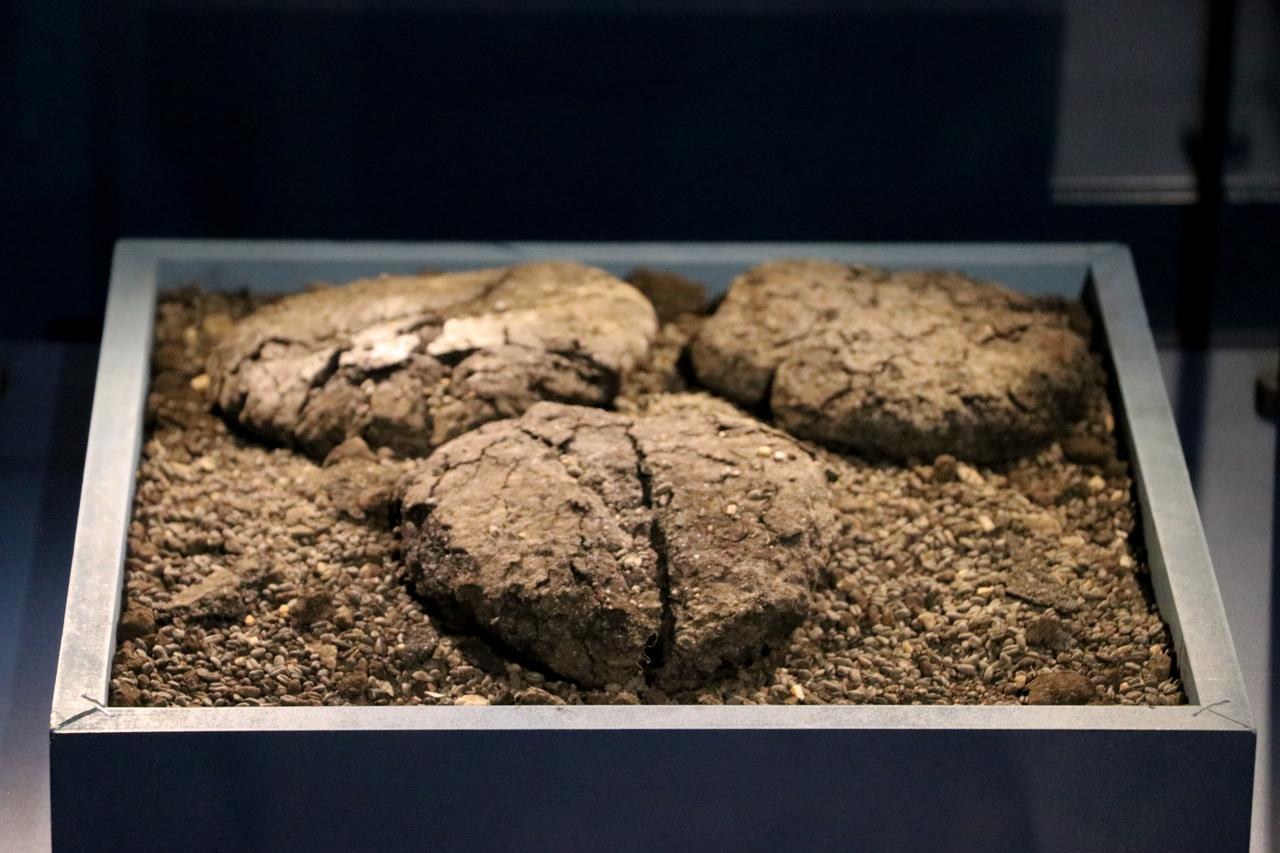
Archaeologists in western Türkiye have recovered eight loaves of 5,000-year-old bread from Seyitömer Mound in Kütahya. An ancient fire charred the loaves and preserved them. They are now on display at the Kütahya Archaeology and Mining Museum.
The find gives visitors a rare, physical look at what people stored and ate in Early Bronze Age Anatolia. It also shows how a disaster in the past can protect evidence for modern researchers.
How the 5,000-year-old bread survived
According to Türkiye Today, the team found the loaves in an Early Bronze Age room during rescue excavations. They lay between the legs of a shelf near an oven structure. Wheat and lentil remains were mixed in with them.
Sevgi Gürdal, director of the Kütahya Museum and lead archaeologist, explained the likely sequence. Bread and farm produce were kept in sacks or bags on the shelf. A fire broke out, and the shelf collapsed, which mixed the items together.
She dated the finds to the first quarter of the Early Bronze Age, which began around 3000 B.C. in the region. Carbonization, the process that turns organic material into charcoal-like matter, is why the bread did not simply rot away.
Rescue excavations at Seyitömer Mound
A rescue excavation is work done to record a site before it is lost to development. Here, the aim is to clear the ground so a lignite reserve can be used. Lignite is a soft brown coal that lies beneath a thermal power plant site.
The mound stands about 26 kilometers (16.2 miles) from central Kütahya. It is 26 meters (85 feet) high, 140 meters wide and 150 meters long. The Eskişehir Museum Directorate began digging in 1989.
The Afyonkarahisar Museum Directorate continued the work from 1990 to 1995. In 2006, a protocol transferred it to the archaeology department of Dumlupınar University. That team of faculty members, students and workers dug until 2014 and handed over more than 17,000 artifacts to the museum.
The Kütahya Museum Directorate has run the excavations since 2019. Çelikler Holding sponsors the current work, which explores the mound’s Middle and Early Bronze Age layers.
Why the Kütahya museum finds matter
Gürdal says the bread is among the museum’s most popular exhibits. Visitors, she said, are curious about how such items survived to the present day. She added that Seyitömer artifacts form a large part of what Turkish museums display.
In her words, the finds offer data on daily and social life, artistic understanding and eating habits of their period. Food remains like these can show what people grew and how they stored it. They cannot, on their own, show what a meal tasted like.
For readers who know Anatolia mainly through Seljuk and Ottoman stories, the find is a reminder of how much older the region’s farming and baking traditions are. Visitors can now see the loaves in Kütahya alongside the wheat and lentils found with them.
Source: Türkiye Today
Featured image: Türkiye Today