Larende Gate Emerges in Konya With 195 Metres of City Wall
Konya dig exposes the Larende Gate and about 195 metres of city wall.
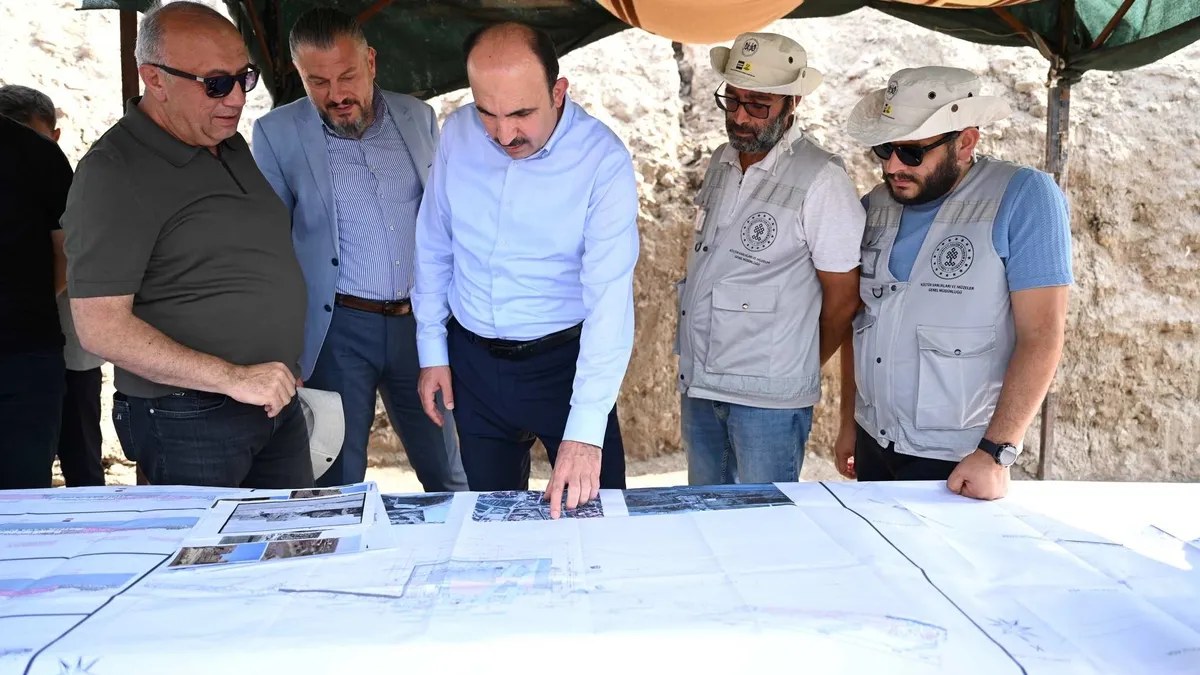
Excavations at Larende in Konya have uncovered the stones and walls of the Larende Gate, along with about 195 metres of city wall. Konya Metropolitan Mayor Uğur İbrahim Altay announced the findings after touring the site with journalists. The gate is now thought to have been a monumental structure 24 to 25 metres high.
The discovery matters because little of Konya’s inner and outer walls survives today. Altay said the city served as a capital for about 200 years, yet the surviving wall remains are limited.
What the Larende Gate excavation has revealed
Altay said the original gate has emerged with its stones and walls. Wall sections with towers (burç, a projecting defensive bastion) have also appeared to the east and west of the gate.
Konya Museum Director Ömer Faruk Türkan described the Larende Gate as one of the most important stone gates of the outer walls. He said the team found the gate’s foundations and the pillars of a wooden bridge that once stood in front of it. In addition, the excavation shows that a moat lay in front of the wall, according to Altay.
Türkan said current data suggest the gate rose roughly 24 to 25 metres from its foundation. This is an estimate, not a final measurement. He also said the dig has finished at one of the two eastern towers, while work continues at the other.
Why the wall survived in this part of Konya
According to Altay, research showed that buildings in the Larende area were single-storey and had no basements. This may have protected the wall and gate below ground, so the team began digging there.
Altay added that the stonework points to the care taken in building the gate. He said reconstruction is running alongside the excavation, so restoration does not wait for the dig to end.
Larende Gate in the story of Konya’s defences
City walls and gates show how a medieval capital protected itself and controlled access. A moat and a wooden bridge in front of a stone gate suggest a layered defence, though researchers have not yet published a full interpretation of this site. Readers who know Anatolia’s history mainly from television drama should remember that archaeology offers physical evidence, while series dramatise events.
Türkan and Altay did not announce a completion date for the excavation or restoration. The remaining eastern tower is the next confirmed task at the site.
Source: SonDakika
Featured image: Sabah