Teos Bouleuterion: Inscriptions Reveal a 2,200-Year-Old Council House
Excavation head Musa Kadıoğlu says inscriptions reveal Teos's politics and schooling.
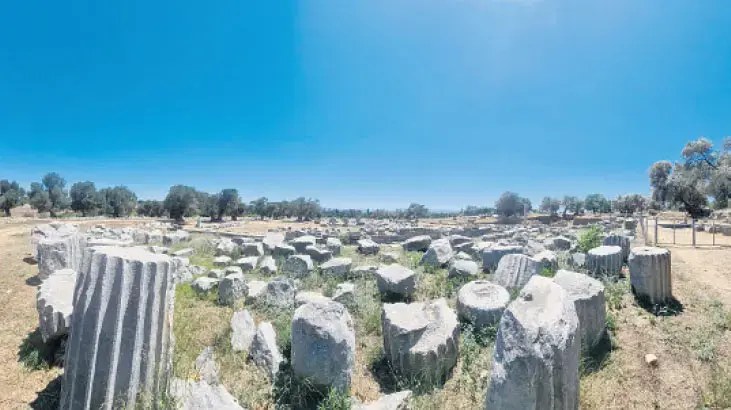
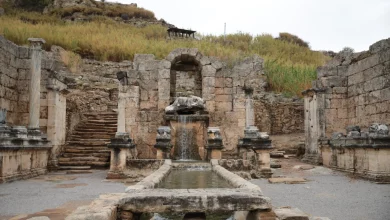
The Teos bouleuterion, a roughly 2,200-year-old council house in Seferihisar, Izmir, has been largely uncovered since excavations began in 2010. According to excavation head Prof. Dr. Musa Kadıoğlu, its inscriptions show how the ancient city handled politics, education and public life.
Teos lies near Sığacık and was one of the 12 city-states of ancient Ionia. A bouleuterion (a council house where a city’s advisory assembly met) stood at its centre. Work is carried out for the Ministry of Culture and Tourism and Ankara University, with financial support from Izmir Metropolitan Municipality.
From two visible steps to a 800-seat building
The building sits just northwest of the agora, the city’s central public square. It has 17 rows of seating and room for about 800 people. A stage was added in the Roman period, which suggests the hall also hosted cultural events.
Kadıoğlu says only two or three steps were visible when his team arrived in 2010. Earlier digs in the 1960s had exposed just a few seats. The team has since cleared the building, and the restoration of the south and north analemma walls (the retaining walls at the sides of the seating) is largely complete. Much of the restoration work, backed by the Turkish Historical Society, was finished in 2026.
What the inscriptions say about education
One key text is the inscription of the Polythros foundation. Polythros, a wealthy citizen of Teos, donated 34,000 drachmas to support the schooling of free-born boys and girls. Kadıoğlu notes that few ancient cities are known to have had such an education foundation.
The inscriptions list subjects such as reading, writing, grammar, literature and music, along with physical training and military drill. They also record teachers’ salaries. According to Kadıoğlu, the best-paid teachers were those of stringed instruments. Music and general knowledge exams were held in the council house, while the team believes physical and military exams took place in the gymnasion to the north.
Kings, a statue and a request for fruit
Letters and honorary inscriptions from the Seleucid king Antiochos III date to the late third century BC. Kadıoğlu says the king granted Teos autonomy, tax exemption and the right of asylum. In return, he asked for a bronze statue of himself in the council house, to be decorated with seasonal fruit each year.
Statue bases and inscriptions from the Roman period also point to the city’s prominent families and their tradition of public honours.
2026 finds near the Temple of Roma and Augustus
This season’s work focused on the Temple of the Goddess Roma and Augustus. The team identified new monument bases whose owners are still unknown. In the paved square in front of the temple, they found reused blocks carrying 13 inscriptions about the city’s earlier political and social ties.
The texts include decisions on foreign judges. Teos invited judges from Miletos, Smyrna and Mytilene to settle some public cases. The name of Parmenion, a commander of Alexander the Great, also appears.
The temple also yielded a marble portrait of Antinoos, a figure close to Emperor Hadrian. Kadıoğlu calls it the only life-size example known in Anatolia. He says the finds suggest the sanctuary was linked to Antinoos in the second century AD.
Why Teos matters beyond one building
Teos was the birthplace of the lyric poet Anacreon. Its Dionysos temple, attributed to the architect Hermogenes, took shape over about 360 years, according to Kadıoğlu. He places the first, smaller temple in the last quarter of the third century BC, with Hadrian-era expansion later. Excavation continues, so more inscriptions may refine this picture.