Ancient Tomb Found Among Theater Seats at Apollonia ad Rhyndacum
A first-century cremation tomb was found in the lower seating of a Bursa theater.
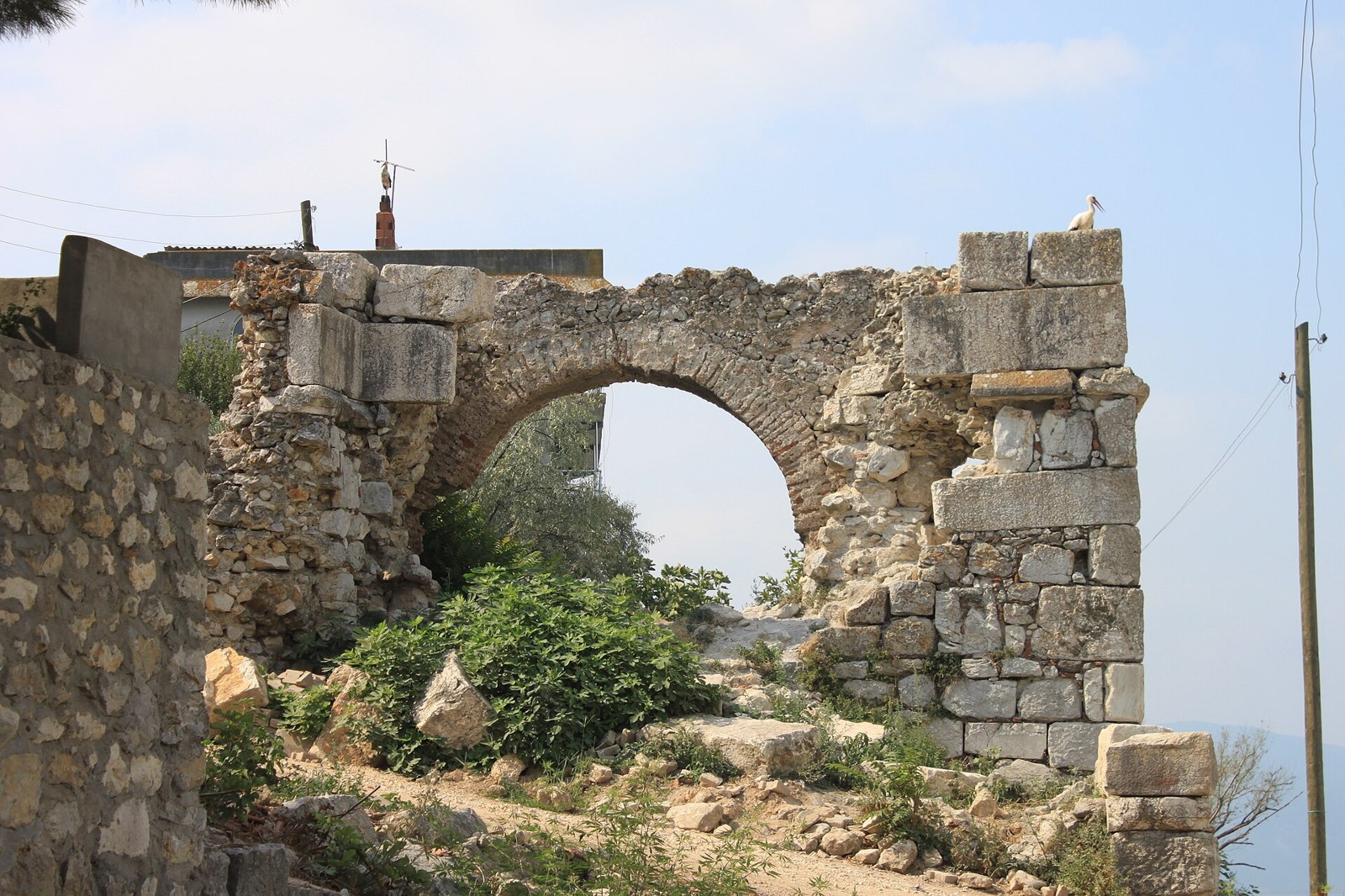
Archaeologists have uncovered a 2,000-year-old tomb among the spectator seats of the ancient theater at Apollonia ad Rhyndacum, in Bursa province, northwestern Türkiye. The grave dates to the first century A.D. and sits in the lower seating section. That is a place where researchers did not expect to find a burial.
The site lies in Gölyazı, a lakeside village in Bursa’s Nilüfer district. Prof. Derya Şahin of Bursa Uludağ University leads the excavation.
What the Theater Tomb Looks Like
The tomb has a mudbrick chest covered by a gabled roof of terracotta tiles. Experts determined that the person buried there was cremated. Because the remains were burned, they reveal little, and the team cannot say how many people were buried.
“Because the remains were burned, they don’t yield much,” Şahin said.
Why a Grave Inside a Theater Puzzles Researchers
The location is what interests the team most. The ancient city already has a burial ground at its entrance, and this tomb closely resembles graves found there. Şahin asked why a tomb would stand in a theater area when the city had its own necropolis (a formal “city of the dead” for burials).
She suggested the grave must be a special one. In her words, it may carry “a trace of sacredness or heroism.” This is a working idea, not a conclusion. The team has not identified who was buried or why.
Researchers will now begin a long period of library research to understand the tomb. This season’s fieldwork is expected to end in late November.
The Theater at Apollonia ad Rhyndacum
The theater was built in the Hellenistic period on the slope of Zambaktepe hill, above Lake Uluabat. It is believed to have held about 5,000 people and had VIP sections and box-like areas. Excavations began in 2021 with permission from Türkiye’s Culture and Tourism Ministry and support from Nilüfer Municipality.
So far, 42 seating steps have been uncovered and returned to their original positions. The team thinks the theater had two levels, separated by a walkway about one metre wide. Inscriptions suggest its final building phase dates to the early second century A.D.
The upper seating was probably built over a vaulted structure, as in Roman theaters. However, it is so badly damaged that little can be confirmed. Şahin noted that continuous settlement in the area has left the ruins less well preserved than those of abandoned cities. She added that the surrounding area may still hold more, including a temple or a road.
Source: Türkiye Today
Featured image: Christian1311 / Wikimedia Commons, CC BY-SA 4.0